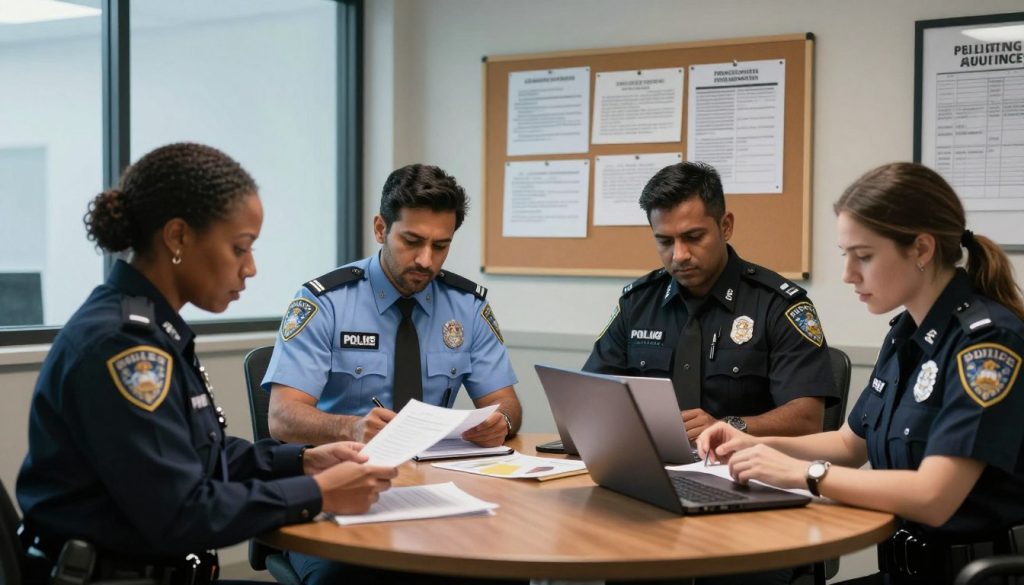
Did you know there are over 18,000 law enforcement agencies across the United States? Despite this massive number, only a small fraction of these departments have external systems to review their actions. This lack of scrutiny can often create a gap in public trust.
Building a strong bond between residents and those who protect them is vital for a healthy community. Honesty and open dialogue pave the way for a more secure and just future for everyone. Trust is the foundation of effective public service.
In this guide, we explore how independent police oversight reforms can change the way local departments operate. These improvements foster a culture of transparency and respect for all neighbors. They help ensure that every action remains visible and fair.
Better systems help agencies work with the public rather than apart from them. Let’s dive into the essential steps needed to achieve true accountability. We will look at how clear rules improve safety for every citizen.
Key Takeaways
- Transparency increases public confidence in local authorities.
- External review boards provide unbiased views on department conduct.
- Stronger rules help protect both the citizens and the officers.
- Data-driven changes lead to safer and more peaceful neighborhoods.
- Local involvement is key to achieving lasting structural success.
- Public trust improves when monitoring systems are open and fair.
Understanding the Need for Law Enforcement Accountability Measures
Ensuring accountability within law enforcement is vital for maintaining public trust and safety. The relationship between law enforcement agencies and the communities they serve has become increasingly strained, highlighting the need for effective accountability measures.
The Current Crisis in Police-Community Relations
The current state of police-community relations is marked by tension and mistrust. Incidents of police misconduct have sparked widespread protests and calls for reform. Restoring trust requires a multifaceted approach that includes transparent and independent oversight mechanisms. Communities are demanding more than just promises of change; they are seeking tangible actions that demonstrate a commitment to accountability.
Why Internal Police Reviews Cannot Ensure Accountability
Internal police reviews often fall short in ensuring accountability due to inherent biases and limitations. These reviews may lack the independence and transparency needed to thoroughly investigate allegations of misconduct. As a result, they can fail to provide the public with confidence that allegations are being taken seriously and addressed appropriately.
The Impact of Oversight Gaps on Public Trust and Safety
Oversight gaps can have significant consequences for both public trust and safety. When law enforcement agencies are not held accountable for their actions, it can lead to a breakdown in community trust. This mistrust can manifest in decreased cooperation between the public and law enforcement, potentially leading to increased crime rates and reduced public safety.
Building the Foundation for Independent Police Oversight Reforms
Building a robust system for independent police oversight requires a multifaceted approach that addresses several key elements. This involves creating a framework that is not only effective but also sustainable and fair. As Justice Ruth Bader Ginsburg once said, “Real change, enduring change, happens one step at a time.” Therefore, understanding and implementing these foundational elements is crucial for achieving meaningful reform.

Defining Genuine Independence from Law Enforcement Agencies
Genuine independence is the cornerstone of effective police oversight. It means that the oversight body must be free from any influence or control by the law enforcement agency it is overseeing. This can be achieved by ensuring that the oversight body has its own budget, staffing, and decision-making authority.
“Independence is not just about structural separation; it’s also about the perception of independence.” This perception is crucial for maintaining public trust. To achieve this, the oversight body’s operations, decision-making processes, and investigations should be transparent and subject to public scrutiny.
Securing Legal Authority and Investigative Powers
For an oversight body to be effective, it must have the legal authority to investigate complaints against law enforcement officers and agencies. This includes having the power to subpoena documents and witnesses, as well as the authority to make recommendations or take disciplinary actions.
Securing legal authority involves working with lawmakers and other stakeholders to enact legislation that grants the necessary powers to the oversight body. As noted by experts,
“The effectiveness of civilian review boards largely depends on their legal authority and the scope of their investigative powers.”
Allocating Sufficient Budget and Staffing Resources
Adequate resources are essential for the effective functioning of an oversight body. This includes not only financial resources but also skilled personnel who can conduct thorough investigations and analyze data effectively.
- A sufficient budget to cover operational costs, including investigations and community outreach.
- Skilled staff, including investigators, analysts, and legal experts.
- Training for staff to ensure they have the necessary skills and knowledge.
Engaging Stakeholders and Community Leaders from the Start
Engaging with stakeholders and community leaders is vital for building trust and ensuring that the oversight body is responsive to community needs. This includes not only community leaders but also law enforcement officials and other relevant stakeholders.
By engaging stakeholders from the start, the oversight body can build support and ensure that its efforts are aligned with community expectations. As one community leader noted,
“For too long, our community has felt unheard. We welcome any effort that gives us a voice in how policing is conducted.”
Step 1: Establish Civilian Review Boards with Investigative Authority
Creating civilian review boards with investigative powers is a key component of police reform initiatives. These boards play a vital role in ensuring that law enforcement agencies are held accountable for their actions.
Recruit Diverse Board Members Who Reflect Your Community
A diverse civilian review board is essential for building trust between law enforcement and the community. The board should comprise individuals from various backgrounds, including community leaders, legal experts, and representatives from local organizations.
Diversity is crucial because it brings different perspectives to the table, ensuring that investigations are thorough and unbiased. When recruiting board members, consider factors such as their understanding of community needs, their ability to remain impartial, and their commitment to transparency.
Grant Subpoena Power and Access to All Police Records
To conduct effective investigations, civilian review boards must have the authority to access all relevant police records and evidence. This includes granting them subpoena power to compel witnesses to testify and obtain necessary documents.
Having access to all police records enables the board to investigate allegations of misconduct thoroughly. It also helps to identify patterns of behavior that may indicate a need for additional training or policy changes within the law enforcement agency.
Define Clear Investigative Protocols and Timelines
Establishing clear investigative protocols and timelines is vital for ensuring that investigations are conducted efficiently and effectively. This includes defining the procedures for receiving and processing complaints, conducting investigations, and making recommendations for disciplinary actions.
Clear protocols help to ensure that investigations are completed in a timely manner, reducing the likelihood of prolonged uncertainty for both the complainant and the officer involved.
| Investigative Protocol | Description | Timeline |
|---|---|---|
| Complaint Receipt | Initial review of complaint to determine jurisdiction and validity | Within 3 days |
| Investigation | Thorough investigation of allegations, including interviews and evidence collection | Within 60 days |
| Recommendations | Submission of findings and recommendations to the law enforcement agency | Within 90 days |
Create Independence Safeguards and Conflict of Interest Rules
To maintain the integrity of the civilian review board, it’s essential to establish safeguards that ensure their independence and impartiality. This includes implementing conflict of interest rules to prevent board members from participating in investigations where they have a personal connection to the parties involved.
By establishing these safeguards, the civilian review board can maintain the trust of both the community and the law enforcement agency, ensuring that their investigations are fair and unbiased.
Step 2: Implement Police Transparency Standards and Data Systems
Transparency in policing is not just a virtue; it’s a necessity for ensuring that law enforcement actions are fair and just. As communities continue to demand more accountability from their law enforcement agencies, the implementation of robust transparency standards becomes increasingly critical.
The journey towards transparency involves several key steps, starting with the mandate for public reporting of police misconduct investigations. This step is fundamental in ensuring that the public has access to information about how complaints against officers are handled.
Mandate Public Reporting of Police Misconduct Investigations
Mandating the public reporting of police misconduct investigations is a crucial step towards transparency. It involves making detailed reports on the investigations, including the findings and any subsequent actions taken, available to the public. As Commissioner James “Jim” Bueermann, President of the National Police Foundation, once said,
“Transparency is the first step towards building trust between law enforcement and the communities they serve.”
This level of transparency helps in building trust and demonstrates a commitment to accountability. It also allows for external oversight and scrutiny, which can lead to improved policing practices.
Build Searchable Databases for Complaint and Discipline Records
Another vital aspect is the creation of searchable databases for complaint and discipline records. These databases should be easily accessible to the public and contain comprehensive information on complaints filed against officers, the investigation process, and the outcomes.
By making this information readily available, law enforcement agencies can provide insights into their operations and demonstrate their commitment to transparency. As noted by the International Association of Chiefs of Police, such databases are essential tools for promoting transparency and accountability.

Require Body-Worn Camera Footage Release Within Set Timeframes
Requiring the release of body-worn camera footage within set timeframes is also a critical component of transparency. This measure ensures that the public has timely access to footage related to significant incidents, enhancing trust and accountability.
The release of body-worn camera footage should be done in a manner that respects privacy concerns while still providing the necessary transparency. Law enforcement agencies should establish clear policies on what footage is released and when.
Establish Annual Transparency Reports with Statistical Analysis
Finally, establishing annual transparency reports with statistical analysis is essential for providing a comprehensive overview of law enforcement activities and outcomes. These reports should include detailed statistics on complaints, investigations, use of force incidents, and other relevant data.
By analyzing these reports, the public and law enforcement agencies can identify trends, areas for improvement, and the effectiveness of current policies. This information is invaluable for making informed decisions about policing practices and reforms.
Step 3: Create Enforceable Accountability in Policing Procedures
The third step in achieving meaningful police reform involves establishing enforceable accountability within policing procedures. This step is crucial for ensuring that accountability measures are not just theoretical but are practically enforceable, leading to tangible improvements in policing.
Design Independent Investigation Processes for Serious Incidents
Independent investigation processes are vital for maintaining public trust and ensuring that serious incidents are handled impartially. These investigations should be conducted by entities that are separate from the law enforcement agencies involved, to avoid conflicts of interest and bias. Independent investigations help in providing unbiased outcomes, which are crucial for building trust between law enforcement and the communities they serve.
Establish Binding Disciplinary Recommendations or Final Decision Authority
To ensure that investigations lead to meaningful actions, it’s essential to grant the investigating bodies the authority to make binding disciplinary recommendations or have the final say in disciplinary actions. This authority ensures that the recommendations made by oversight bodies are not ignored and that there are consequences for misconduct.
Integrate Community Policing Initiatives into Oversight Programs
Community policing initiatives are a key component of modern policing strategies. By integrating these initiatives into oversight programs, law enforcement agencies can foster better relationships with the communities they serve. Community policing emphasizes building trust and cooperation between law enforcement and the public, which is essential for effective policing.
- Regular community meetings
- Transparency in policing practices
- Collaborative problem-solving
Develop Officer Early Warning Systems to Prevent Misconduct
Early warning systems are designed to identify potential issues before they escalate into serious problems. By monitoring officer behavior and performance, these systems can help prevent misconduct. Early intervention can include additional training, counseling, or other support measures to address issues early on.
Addressing Obstacles in Police Reform Initiatives
Implementing independent police oversight reforms is a complex process that faces numerous challenges. As communities strive to enhance law enforcement accountability measures, they must navigate a range of obstacles that can hinder progress.
These challenges can arise from various sources, including legal, political, and social domains. Understanding and addressing these hurdles is crucial for the successful implementation of police reform initiatives.
Navigate Collective Bargaining Agreements and Union Contracts
One significant obstacle in implementing police reform is navigating the complexities of collective bargaining agreements and union contracts. These agreements often contain provisions that can limit the ability to hold officers accountable for misconduct.
To overcome this challenge, it is essential to engage in constructive dialogue with police unions and other stakeholders. This can involve renegotiating contracts to include provisions that support transparency and accountability.
Overcome Legal Challenges to Oversight Authority
Legal challenges can also pose a significant barrier to implementing effective independent police oversight reforms. These challenges may arise from lawsuits filed by police unions or other groups opposed to reform.
To address these challenges, it is crucial to ensure that oversight agencies have a clear legal mandate and the necessary authority to carry out their work. This may involve working with lawmakers to strengthen legislation supporting oversight.
Build Coalition Support Among Diverse Community Groups
Building a broad coalition of support among diverse community groups is vital for sustaining police reform efforts. This involves engaging with community leaders, advocacy groups, and other stakeholders to build a strong, unified front in support of reform.
By fostering collaboration and trust among community groups, reform advocates can create a more robust and resilient movement for change.
Ensure Sustained Political and Financial Commitment
Sustained political and financial commitment is essential for the long-term success of police reform initiatives. This requires ongoing engagement with policymakers and other stakeholders to secure the necessary resources and support.
To achieve this, reform advocates must be prepared to make a long-term commitment to the cause, working tirelessly to maintain momentum and overcome the inevitable challenges that arise.
Counter Misinformation About Oversight Effects on Public Safety
Finally, it is crucial to counter misinformation about the impact of law enforcement accountability measures on public safety. Some critics argue that oversight reforms can compromise public safety by limiting police authority.
To address this, reform advocates must be prepared to present evidence and data demonstrating the positive impact of oversight on both police-community relations and public safety.
Conclusion
Implementing independent police oversight reforms is crucial for rebuilding trust between law enforcement agencies and the communities they serve. By establishing robust community policing initiatives and ensuring effective oversight of law enforcement agencies, cities can promote transparency and accountability.
The steps outlined in this article, from creating civilian review boards to implementing transparency standards, provide a comprehensive framework for achieving these goals. As cities move forward with these reforms, sustained commitment from community leaders, law enforcement, and policymakers will be essential.
By working together to implement these reforms, communities can foster a culture of accountability and transparency within their law enforcement agencies. This, in turn, can lead to improved public safety and trust in the policing system.