
Tag: Fourth Amendment

  • Constitutional Protections Against Excessive Police Force

    Constitutional Protections Against Excessive Police Force

    Did you know the Supreme Court first set clear rules for officer behavior in 1989? Before then, local standards varied wildly across the country. Today, the Bill of Rights provides vital civil liberties for every citizen.

    Knowing the constitutional limits on police force keeps you safe. These legal standards ensure that officials remain fair during any encounter. If an individual faces harsh treatment, they can seek justice through the courts.

    Awareness of these rules gives you power. It helps maintain a fair society where everyone stays respected. This guide aims to simplify your rights clearly. We hope this information makes you feel secure. Let us dive into the details now.

    Key Takeaways

    • The Fourth Amendment guards against unreasonable seizures.
    • Legal standards require officers to use reasonable methods.
    • Civil liberties protect individuals during traffic stops.
    • Citizens may record interactions within public spaces.
    • Awareness promotes safety for everyone involved.
    • Unfair actions can lead to legal consequences for agencies.

    1. Understanding Your Constitutional Rights During Police Encounters

    The Constitution provides specific protections for individuals during police encounters, and understanding these rights is essential. During interactions with law enforcement, citizens are protected by several constitutional amendments that limit the power of police officers.

    The Fourth Amendment Protection Against Unreasonable Seizures

    The Fourth Amendment safeguards individuals against unreasonable seizures, which include arrests and detentions. This amendment requires law enforcement to have probable cause before seizing or arresting someone.

    The Fourteenth Amendment Due Process Clause

    The Fourteenth Amendment’s Due Process Clause ensures that individuals are treated fairly and that their rights are not violated by state or local authorities. It protects against arbitrary actions by government officials, including police officers.

    How These Rights Work Together to Protect You

    Together, the Fourth and Fourteenth Amendments create a robust protection framework for individuals during police encounters. Understanding these rights can help you recognize when they are being violated.

    Amendment Protection Application
    Fourth Amendment Protection against unreasonable seizures Requires probable cause for arrests and detentions
    Fourteenth Amendment Due Process Clause Ensures fair treatment by state and local authorities

    2. What Legally Constitutes Excessive Police Force

    The legal definition of excessive police force is a critical aspect of understanding your constitutional protections. It is determined by the objective reasonableness standard, which assesses whether the force used by police was necessary given the circumstances.

    The Objective Reasonableness Standard Explained

    The objective reasonableness standard is a legal benchmark used to evaluate whether the force used during a police encounter was justified. This standard considers the perspective of a reasonable officer on the scene, taking into account the information available at the time.

    Key Factors Courts Use to Evaluate Police Force

    Courts examine several factors when determining if the police force used was excessive. These include:

    Severity of the Suspected Crime

    The more severe the crime, the more likely it is that a higher level of force may be deemed reasonable.

    Whether You Pose an Immediate Threat

    If you pose a significant threat to the officer or others, greater force may be justified.

    Whether You Are Resisting or Attempting to Flee

    Active resistance or flight can influence the level of force considered reasonable.

    Factor Consideration Impact on Force Justification
    Severity of Crime More severe crimes may justify higher force Increases likelihood of force being deemed reasonable
    Immediate Threat Significant threat to officer or others Justifies greater force
    Resisting or Fleeing Active resistance or attempt to flee May justify increased force

    Real-World Examples of Excessive Force

    Examples of excessive force include using lethal force against unarmed individuals who do not pose an immediate threat.

    Understanding these factors and the objective reasonableness standard can help clarify when police actions may cross the line into excessive force.

    3. How to Recognize When Your Rights Are Being Violated

    Knowing how to identify violations of your rights during police interactions can be a powerful tool. It empowers you to stand up for yourself and seek justice when necessary.

    Warning Signs of Excessive Force in Action

    Excessive force can manifest in various ways, including physical violence, verbal abuse, and unnecessary use of restraints. Be aware of the following signs:

    • Police using pepper spray, batons, or other weapons without justification
    • Officers applying handcuffs too tightly or using chokeholds
    • Verbal commands that are aggressive or demeaning

    Understanding Lawful Versus Unlawful Use of Force

    Lawful use of force is typically proportionate to the threat posed and follows established protocols. Unlawful force, on the other hand, is excessive and violates constitutional protections. Understanding this distinction is key to recognizing rights violations.

    Common Situations Where Violations Frequently Occur

    Violations can occur during arrests, traffic stops, and searches. Be particularly cautious in situations where you’re not posing an immediate threat but are still subjected to aggressive police behavior.

    4. Constitutional Limits on Police Force You Should Know

    The Constitution sets clear boundaries on the use of force by law enforcement officers. These boundaries are designed to protect citizens from excessive police force while allowing officers to perform their duties effectively.

    Legal Boundaries That Restrict Officer Actions

    Law enforcement officers are subject to constitutional limits that dictate when and how they can use force. These limits are primarily derived from the Fourth Amendment, which protects against unreasonable seizures, and the Fourteenth Amendment, which ensures due process.

    The Proportionality Principle in Action

    The proportionality principle is a key concept in determining whether the use of force by police is justified. It requires that the level of force used be proportionate to the threat posed by the individual.
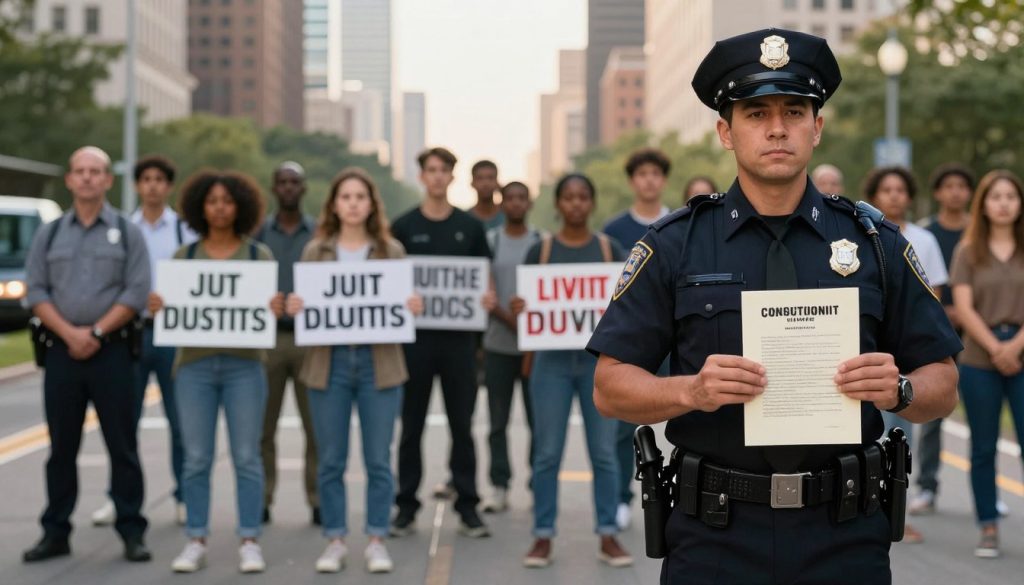
    A dramatic scene illustrating the concept of constitutional limits on police force. In the foreground, a police officer in professional attire stands upright, expressing a sense of duty, while holding a constitution document prominently in one hand. In the middle ground, a diverse group of citizens representing various backgrounds stands in peaceful protest, holding placards advocating for justice and accountability. In the background, a well-lit cityscape creates a sense of urban life, with soft, warm lighting to evoke hope. The composition captures the tension between authority and citizens’ rights, suggesting balance and order amid a powerful message. The atmosphere should feel respectful yet assertive, emphasizing the importance of constitutional protections without depicting violence or conflict.

    Strict Limitations on Deadly Force

    The use of deadly force by police is subject to strict limitations. Officers are generally only permitted to use deadly force when there is a significant threat to their life or the lives of others.

    Special Protections for Non-Threatening Individuals

    Individuals who are not posing a threat to law enforcement officers or others are entitled to special protections. The use of force against non-threatening individuals is considered excessive and is not permitted under the Constitution.

    5. Step-by-Step Guide to Protecting Yourself During Police Encounters

    Protecting yourself during police encounters requires a combination of knowledge and calm behavior. When faced with law enforcement, it’s essential to understand your rights and how to assert them effectively.

    Step 1: Remain Calm and Begin Mental Documentation

    Staying calm allows you to think clearly and make rational decisions. Begin mentally documenting the encounter, noting the time, location, and the officers’ badge numbers and names if possible.

    Step 2: Clearly State Your Constitutional Rights

    You have the right to remain silent and to ask for an attorney. Clearly stating these rights can help de-escalate the situation and protect your legal interests.

    Step 3: Never Physically Resist While Verbally Objecting

    While you should not physically resist arrest, you can verbally object to the actions of the police. This can help establish a record of your objections and potentially support your case if needed.

    Step 4: Immediately Request Medical Attention for Any Injuries

    If you’re injured during the encounter, request medical attention immediately. This not only ensures your well-being but also documents your injuries, which can be crucial for any future legal actions.

    6. What to Do After Experiencing Excessive Police Force

    Being prepared and knowing what to do after experiencing excessive police force can help protect your rights and interests. The actions you take immediately following such an incident are crucial.

    Step 1: Get Medical Treatment and Secure Documentation

    Seeking medical treatment immediately after the incident is vital. Not only does it ensure your well-being, but it also provides documentation of your injuries.

    Step 2: Collect and Preserve All Available Evidence

    Collecting evidence is a critical step. This includes taking photographs of your injuries and any relevant scenes, preserving video footage if available, and obtaining witness contact information.

    Taking Photographs and Preserving Video

    Visual evidence can be compelling. Take clear, dated photographs of your injuries and preserve any video footage that may have captured the incident.

    Obtaining Witness Contact Information

    Witnesses can provide valuable testimony. Ensure you collect their contact information for future reference.

    Writing Your Detailed Account

    As soon as possible, write down a detailed account of what happened. Include as many specifics as you can remember.
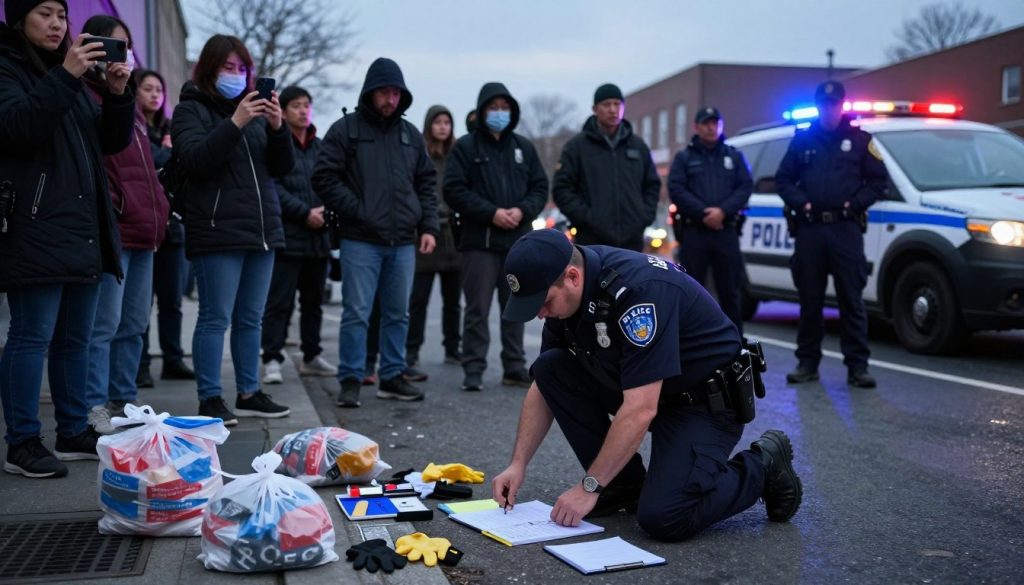
    A tense urban scene depicting a police officer in professional attire, collecting evidence at the site of an incident involving excessive police force. In the foreground, the officer kneels, examining the ground closely for any relevant evidence, surrounded by an array of forensic tools like evidence bags, gloves, and note-taking materials. The middle ground features a crowd of concerned citizens, standing at a distance, some recording the event on their smartphones, their expressions a mix of curiosity and unease. In the background, a police vehicle is parked with flashing lights, creating a stark contrast against the muted evening light. The atmosphere is somber and tense, emphasized by overcast skies and low lighting, conveying a sense of urgency and seriousness about the investigation. Use a wide-angle lens to capture the intensity of the scene.

    Step 3: File Formal Complaints Through Proper Channels

    Filing a formal complaint is essential. This can typically be done through the police department’s internal affairs division or a civilian complaint board.

    Step 4: Consult with a Civil Rights Attorney

    Consulting with a civil rights attorney can provide you with the guidance needed to navigate the legal process and protect your rights.

    Action Purpose
    Get Medical Treatment Ensure well-being and document injuries
    Collect Evidence Support your case with visual and testimonial evidence
    File a Formal Complaint Notify the authorities and start the legal process
    Consult a Civil Rights Attorney Navigate the legal system and protect your rights

    7. Legal Remedies and Support Resources at Your Disposal

    Those who have faced excessive police force can turn to the law for support and justice. Understanding the available legal remedies is crucial for victims seeking recourse.

    Pursuing a Section 1983 Federal Civil Rights Claim

    A Section 1983 claim allows individuals to sue state actors, including police officers, for violating their constitutional rights. This federal law provides a powerful tool for holding law enforcement accountable for their actions.

    Understanding Criminal Prosecution Possibilities

    In cases of severe misconduct, criminal prosecution may be pursued against offending officers. This process involves the state or federal government bringing charges against the officers involved.

    Filing Internal Police Department Grievances

    Filing a complaint with the police department’s internal affairs division is another avenue for addressing grievances. This process allows for an internal investigation into the alleged misconduct.

    Organizations Ready to Assist You

    Several organizations provide support and legal assistance to victims of police brutality. These include:

    American Civil Liberties Union (ACLU)

    The ACLU is a prominent organization dedicated to protecting individual rights and liberties, including those related to police misconduct.

    National Police Accountability Project

    This organization focuses on holding law enforcement accountable through legal action and advocacy.

    State and Local Legal Aid Organizations

    Various state and local organizations offer legal aid and support to individuals dealing with police misconduct issues.

    Organization Focus Services
    ACLU Protecting individual rights and liberties Legal assistance, advocacy
    National Police Accountability Project Holding law enforcement accountable Legal action, advocacy
    State and Local Legal Aid Organizations Providing legal aid to individuals Legal assistance, support

    Protecting Your Rights and Promoting Police Accountability

    Understanding your constitutional protections against excessive police force is crucial in maintaining a fair and just society. The Fourth and Fourteenth Amendments provide essential safeguards against unreasonable seizures and ensure due process.

    By being aware of your rights and recognizing the signs of excessive force, you can protect yourself during police encounters. If you experience or witness police misconduct, seeking help and reporting incidents are vital steps toward promoting police accountability.

    Leveraging resources such as filing formal complaints, consulting with a civil rights attorney, and pursuing legal remedies can help ensure that your rights are upheld. By standing together for constitutional protections, we can foster a culture of transparency and accountability within law enforcement agencies.

    FAQ

    Which specific parts of the Constitution protect me from excessive police force?

    Your primary protections come from the Fourth Amendment, which guards against unreasonable seizures, and the Fourteenth Amendment, which ensures due process. Together, these amendments establish the legal framework that requires officers to respect your personal liberty and physical safety during any encounter.

    What is the “objective reasonableness” standard used by courts?

    The objective reasonableness standard is the benchmark courts use to determine if an officer’s use of force was lawful. Instead of looking at the officer’s intent, judges evaluate the facts of the situation, such as the severity of the suspected crime, whether the individual posed an immediate threat, and if the person was resisting or attempting to flee at that exact moment.

    Are there strict limits on when a police officer can use deadly force?

    Yes, there are significant constitutional limits. Officers are generally prohibited from using deadly force unless it is necessary to prevent escape and the officer has probable cause to believe that the suspect poses a significant threat of death or serious physical injury to the officer or others. The proportionality principle dictates that the level of force must match the level of threat provided.

    What should I do if I believe my rights are being violated during a police encounter?

    The most important thing is to remain calm and avoid physical resistance, even while you are verbally objecting to the treatment. Clearly state your constitutional rights, such as your right to remain silent, and try to make a mental note of the officers’ names or badge numbers. As soon as the encounter ends, immediately request medical attention for any injuries to ensure there is a professional record of the incident.

    How can I properly document an instance of excessive force after it happens?

    To build a strong case, you should collect and preserve all available evidence. This includes taking photographs of injuries, preserving video footage from bystanders, and obtaining witness contact information. Writing a detailed account of the event while the memory is fresh is also a crucial step before you file formal complaints through internal police department channels.

    What is a Section 1983 federal civil rights claim?

    A Section 1983 claim is a powerful legal tool that allows individuals to sue government officials, including police officers, in federal court for violating their constitutional rights. This is the primary pathway for seeking financial compensation and accountability for victims of unlawful use of force.

    Which organizations can provide support if I have been a victim of police misconduct?

    Several reputable organizations are dedicated to helping citizens navigate these difficult situations. You can reach out to the American Civil Liberties Union (ACLU) or the National Police Accountability Project (NPAP) for resources and legal guidance. Additionally, many state and local legal aid organizations offer specialized assistance for those pursuing civil rights grievances.
  • Constitutional Rights Violations in the 21st Century

    Constitutional Rights Violations in the 21st Century

    Did you know companies track an average person’s data 3,000 times daily? Such massive scale surveillance happens without clear consent, sparking debate over how legal safety works now. Understanding personal freedom becomes vital as digital tools grow faster than current laws.

    Protecting every citizen requires fresh knowledge of privacy laws. While technology advances, our basic protections must remain strong. This guide explores today’s hurdles regarding civil liberties to help stay safe.

    Keeping your data secure is part of maintaining democracy. Let us examine ways that modern life changes legal norms. We hope this info empowers daily choices and keeps folks informed across America.

    Many people assume their home stays private, yet smart devices listen constantly. Staying alert helps maintain balance between tech convenience and individual protection. New software monitors locations, messages, and even health metrics regularly.

    This constant flow of info creates unique risks for everyone today. We should look closer at how these changes impact our collective future and legal standing.

    Key Takeaways

    • Digital tracking poses new risks to privacy.
    • Laws often lag behind rapid tech growth.
    • Public awareness strengthens legal protections.
    • Personal data security is a modern priority.
    • Informed citizens better defend their freedoms.

    Understanding Your Constitutional Rights in the Digital Age

    As we navigate the complexities of the 21st century, understanding our constitutional rights is more crucial than ever. The digital age has brought about a myriad of challenges and opportunities that were unimaginable at the time of the Constitution’s drafting.

    The interpretation and application of these rights are evolving to address the nuances of modern technology.

    The Bill of Rights and Modern Applications

    The Bill of Rights, comprising the first ten amendments to the US Constitution, forms the cornerstone of civil liberties in the United States. These amendments guarantee fundamental rights such as freedom of speech, the right to bear arms, and protection against unreasonable searches and seizures. In the digital age, these rights are being tested by civil liberties infringements that challenge their traditional interpretations.

    Right Traditional Interpretation Modern Application
    Freedom of Speech Protection against government restriction on expressing opinions Debates over online censorship and social media regulation
    Right to Privacy Protection against unreasonable searches and seizures Concerns over digital privacy violations and government surveillance

    How Technology Has Changed Rights Interpretation

    Technological advancements have significantly altered how constitutional rights are interpreted. The rise of the internet and social media has led to new challenges in applying traditional constitutional protections. For instance, issues surrounding digital privacy violations have become increasingly prominent, with debates over data collection, surveillance, and the right to be forgotten.

    Your Core Protections as a US Citizen

    Despite the challenges posed by the digital age, US citizens retain core protections under the Constitution. These include the right to free speech, protection against unreasonable searches, and the right to due process. Understanding these rights is crucial for ensuring that they are respected and upheld in the face of evolving technological and societal landscapes.

    Common Constitutional Rights Violations in the 21st Century

    In the 21st century, the landscape of constitutional rights violations has dramatically evolved, presenting new challenges for citizens and legal systems alike. The rapid advancement of technology and changes in societal norms have led to new forms of legal rights breaches that were previously unimaginable.

    A dramatic courtroom scene depicting various forms of constitutional rights violations. In the foreground, a tense group of diverse individuals in professional business attire (men and women of different ethnicities) express concern and frustration. The middle ground features a judge, with a gavel raised, surrounded by legal documents symbolizing the struggle for justice. The background reveals a dimly lit courtroom where shadows play across the walls, conveying a sense of urgency and conflict. Use warm, moody lighting to highlight the seriousness of the situation, casting soft shadows that evoke a somber atmosphere. Capture the scene with a slightly low-angle shot to emphasize the weight of the judicial power and the anxiety of the individuals impacted by these violations.

    Digital Privacy Violations and Government Surveillance Concerns

    The digital age has brought about significant concerns regarding government surveillance and digital privacy. Citizens are increasingly vulnerable to various forms of data collection and monitoring.

    Mass Data Collection Programs

    Programs that collect data on a massive scale often infringe on individuals’ right to privacy. These programs can gather personal information without explicit consent, raising serious concerns about privacy violations.

    Warrantless Cell Phone Tracking

    The use of cell phone tracking without a warrant is another significant issue. This practice can lead to unlawful surveillance, potentially violating the Fourth Amendment rights of individuals.

    Social Media Monitoring Without Consent

    Monitoring social media activities without users’ consent is a growing concern. This practice can be seen as an invasion of privacy and may infringe on individuals’ First Amendment rights.

    Freedom of Speech Infringements in Modern Society

    The digital era has also seen various infringements on the freedom of speech. While this right is fundamental, there are instances where it is challenged or restricted.

    Peaceful Protest Restrictions and Over-Policing

    Restrictions on peaceful protests and over-policing can significantly infringe on individuals’ right to free speech. These actions can deter people from exercising their constitutional rights.

    Retaliatory Actions Against Whistleblowers

    Retaliatory actions against whistleblowers can also suppress free speech. Whistleblowers play a crucial role in exposing wrongdoing, and protecting them is essential for maintaining transparency.

    Content Suppression and Censorship

    Content suppression and censorship, whether by government entities or private companies, can have a chilling effect on free speech. It is crucial to balance regulation with the preservation of this fundamental right.

    Unlawful Search and Seizure Issues

    Unlawful search and seizure practices continue to be a significant concern. The Fourth Amendment protects citizens from unreasonable searches and seizures, but modern challenges have tested these protections.

    Digital Device Searches at Borders

    Searching digital devices at borders without a warrant raises questions about the limits of government authority. This practice can potentially violate individuals’ rights to privacy.

    No-Knock Warrants and Home Invasions

    The use of no-knock warrants has led to instances of home invasions, where individuals’ homes are entered without prior notice. This can be traumatic and may violate the principles of the Fourth Amendment.

    Civil Asset Forfeiture Without Due Process

    Civil asset forfeiture practices, where assets are seized without due process, can also be considered a form of unlawful seizure. This practice undermines the principle of innocent until proven guilty.

    How to Recognize When Your Rights Are Being Violated

    As a citizen, it’s vital to understand the signs that indicate your constitutional rights are being compromised. Recognizing these violations is the first step in protecting yourself and asserting your rights.

    Identifying Fourth Amendment Violations in Real Time

    The Fourth Amendment protects you from unreasonable searches and seizures. To identify violations, you need to understand what constitutes a legal search or seizure.

    Recognizing Illegal Searches

    An illegal search occurs when law enforcement enters your property without a valid warrant or probable cause. Always ask to see the warrant and verify its authenticity.

    Understanding Warrant Requirements

    A valid warrant must be issued by a judge, based on probable cause, and must specify the place to be searched and the items to be seized. Any deviation from these requirements could render the warrant invalid.

    Warrant Requirement Description
    Issued by a Judge The warrant must be signed by a judge, ensuring a neutral third party has reviewed the probable cause.
    Probable Cause There must be sufficient reason to believe a crime has been committed or evidence is present.
    Specificity The warrant must clearly state the place to be searched and the items to be seized.

    Spotting First Amendment Infringements

    The First Amendment protects your rights to free speech, assembly, and petition. Violations can occur when these rights are restricted without just cause.

    When Speech Restrictions Cross the Line

    Restrictions on speech are permissible only when they serve a compelling government interest and are narrowly tailored. Content-based restrictions are generally unconstitutional.

    Assembly and Petition Rights Violations

    Violations occur when authorities unreasonably restrict your right to assemble peacefully or petition the government.

    Understanding Due Process Violations

    Due process violations happen when you are denied fair treatment under the law. This includes being deprived of life, liberty, or property without proper legal procedures.

    Documentation Methods and Evidence Collection

    Documenting rights violations is crucial for building a strong case. Keep detailed records of the incident, including dates, times, and the individuals involved.

    A somber office environment symbolizes the theme of privacy rights violations. In the foreground, a professional-looking individual in business attire sits at a cluttered desk, staring at a computer screen filled with unsettling surveillance graphics that depict intrusive monitoring. The middle layer features office windows, showcasing shadowy figures lurking outside with high-tech gear, representing external surveillance. In the background, a stark contrast of an ominous dark sky and looming buildings reflects a sense of foreboding. Soft but harsh lighting creates a tense atmosphere, with shadows casting across the room, hinting at the invasion of personal space. Use a shallow depth of field to focus on the individual’s worried expression, emphasizing the emotional weight of the situation.

    Collecting evidence, such as photographs, videos, or witness statements, can also support your claim. Ensure that your documentation is thorough and accurate to effectively assert your rights.

    Step-by-Step Actions to Take When Your Constitutional Rights Are Violated

    If you believe your constitutional rights have been infringed upon, taking immediate and informed action is essential. The following steps are designed to guide you through the process of addressing the violation effectively.

    Step 1: Remain Calm and Assess the Situation

    Remaining calm is crucial in effectively handling the situation. It allows you to think clearly and make rational decisions.

    Safety First Protocols

    Ensure your safety and the safety of those around you. If you’re in a dangerous situation, try to remove yourself from harm’s way as quickly as possible.

    Mental Preparation Techniques

    Take a few deep breaths, and try to assess the situation objectively. Mental preparation can help you stay focused on the necessary steps to take.

    Step 2: Document Everything in Detail

    Documentation is key in building a strong case. It provides evidence that can be used to support your claims.

    What Information to Record

    Note down the date, time, location, and details of the incident. Include descriptions of the individuals involved and any witnesses.

    Photo and Video Documentation Guidelines

    If it’s safe to do so, take photos or videos of the scene. Be sure to capture relevant details without compromising your safety or the safety of others.

    Step 3: Assert Your Rights Clearly and Respectfully

    It’s essential to communicate your concerns clearly and respectfully to the relevant authorities or individuals involved.

    Verbal Statements to Use

    State your concerns clearly, using phrases like “I believe my constitutional rights are being violated” or “I would like to assert my rights under the Constitution.”

    What Not to Say or Do

    Avoid being confrontational or aggressive, as this can escalate the situation. Refrain from making statements that could be misinterpreted or used against you.

    Step 4: Seek Legal Representation Immediately

    Legal representation can provide you with the guidance and support needed to navigate the complexities of constitutional law.

    Finding a Civil Rights Attorney

    Look for attorneys who specialize in civil rights cases. They can offer expert advice tailored to your situation.

    Understanding Attorney-Client Privilege

    Understand that communications with your attorney are protected under attorney-client privilege, allowing you to share information freely.

    Step 5: File Formal Complaints and Reports

    Filing complaints and reports is a formal step in addressing the violation of your rights.

    Federal Agency Complaints

    If your rights have been violated by a federal agency or official, you can file a complaint with the relevant federal agency.

    State and Local Reporting Options

    For violations by state or local entities, identify the appropriate state or local agency to report the incident.

    Step 6: Consider Legal Action and Community Advocacy

    Depending on the severity of the violation, considering legal action or community advocacy may be necessary.

    Filing Civil Rights Lawsuits

    If other avenues have been exhausted, filing a civil rights lawsuit may be an appropriate step to seek justice.

    Working With Advocacy Organizations

    Partnering with organizations that advocate for civil liberties can provide additional support and resources.

    Protecting Yourself From Retaliation

    Be aware of the potential for retaliation and take steps to protect yourself, including documenting any further incidents.

    Conclusion

    Understanding and defending constitutional rights violations in the 21st century is crucial in today’s digital landscape. As technology continues to evolve, it’s essential to remain vigilant and proactive in protecting these fundamental rights.

    The Constitution remains a cornerstone of American democracy, safeguarding individual freedoms and limiting government overreach. By staying informed about common constitutional rights violations, individuals can better recognize when their rights are being infringed upon.

    By following the steps outlined in this article, citizens can effectively defend their rights and contribute to a more just society. Remaining aware of the challenges posed by the digital age and taking action when necessary is key to preserving the protections afforded by the Constitution.

    FAQ

    What are the most common constitutional rights violations in the 21st century regarding my phone?

    In the modern era, digital privacy violations often occur through unlawful search and seizure of mobile devices. While the Supreme Court case Riley v. California established that police generally need a warrant to search your phone during an arrest, many citizens still face legal rights breaches through warrantless “gray-key” forensic downloads or intrusive digital device searches at borders conducted by U.S. Customs and Border Protection (CBP).

    How can I tell if I am experiencing freedom of speech infringements online?

    While private platforms like Meta or X (formerly Twitter) have their own terms of service, freedom of speech infringements occur when the government pressures these companies to suppress specific viewpoints. Furthermore, if you are a public employee and face retaliation for speaking on matters of public concern, this may constitute a significant civil liberties infringement under the First Amendment.

    What should I do if I am a victim of government surveillance concerns?

    If you suspect you are being targeted by unauthorized government surveillance concerns, such as through the use of Stingray cell-site simulators or bulk data collection by the NSA, your first step should be to consult with a specialized civil rights attorney. You can also reach out to advocacy groups like the Electronic Frontier Foundation (EFF) or the ACLU to help document privacy rights violations and determine if there has been a breach of your Fourth Amendment protections.

    Are no-knock warrants considered human rights abuses?

    Many legal experts and activists argue that no-knock warrants, like the one tragically involved in the Breonna Taylor case in Louisville, represent extreme human rights abuses and a violation of the “knock and announce” rule rooted in the Fourth Amendment. These practices often lead to unlawful search and seizure claims and physical harm, prompting many states to reconsider their legality to prevent further constitutional rights violations in the 21st century.

    Can the government seize my property without charging me with a crime?

    Yes, this is known as civil asset forfeiture, and it is often cited as one of the most egregious legal rights breaches in the United States. Under this practice, agencies like the DEA can seize cash, vehicles, or property they suspect is linked to a crime, even without an arrest. Fighting these civil liberties infringements requires a rigorous “innocent owner” defense to prove your assets were obtained legally.

    What are my protections against digital privacy violations at my workplace?

    While private employers have broad leeway, public sector employees are protected by the Fourth Amendment against unreasonable searches. Privacy rights violations can occur if a government agency monitors private accounts or personal devices without a clear policy or legal cause. Understanding your “reasonable expectation of privacy” is key to identifying constitutional rights violations in the 21st century workplace.