Tag: Civil Rights Litigation

  • Excessive Force Civil Litigation: Protecting Your Rights

    Excessive Force Civil Litigation: Protecting Your Rights

    Did you know that police officers in the United States fatally shoot over 1,000 people every single year? This startling statistic highlights a significant requirement for public awareness and strong legal protections. When interactions with the law turn violent, the impact creates lasting emotional trauma for families and communities.

    Navigating a formal legal battle for justice might seem like an uphill struggle for many victims. However, standing up for your dignity is a vital part of the American justice system. This path allows everyday citizens to hold government officials responsible for their physical actions.

    Starting the process of excessive force civil litigation ensures that constitutional rights stay strong and relevant. We will walk you through the fundamental procedures of building a robust case. Your future safety and your legal voice matter deeply in this pursuit of fairness.

    Key Takeaways

    • Understand how to identify violations of your constitutional rights.
    • Learn the standard procedures for filing a formal legal claim.
    • Discover why physical evidence is the most powerful tool for your case.
    • Find out how to select a knowledgeable legal professional for help.
    • Explore how these cases encourage better policing in your community.
    • Gain the confidence needed to navigate the complex legal system.

    Understanding Excessive Force and Your Constitutional Rights

    Understanding what constitutes excessive force is crucial for recognizing when law enforcement actions cross the line into unconstitutional behavior. The concept of excessive force is closely tied to the protections afforded by the Fourth Amendment of the U.S. Constitution, which guards against unreasonable searches and seizures.

    What Legally Constitutes Excessive Force

    Excessive force occurs when law enforcement officers use more force than is reasonably necessary to manage a situation. The determination of what is “reasonable” can be complex and depends on the specific circumstances of each incident. Factors such as the severity of the crime, whether the suspect poses an immediate threat, and whether the suspect is actively resisting or fleeing are considered.

    Key factors in determining excessive force include:

    • The severity of the crime at issue
    • Whether the suspect poses an immediate threat to the safety of the officers or others
    • Whether the suspect is actively resisting arrest or attempting to evade arrest by flight

    How the Fourth Amendment Protects You from Police Misconduct

    The Fourth Amendment is fundamental in protecting individuals from police misconduct, including excessive force. It mandates that any force used by law enforcement must be objectively reasonable. This amendment is the cornerstone of excessive force legal representation, providing the legal basis for individuals to seek redress when their rights have been violated.

    The landmark case of Graham v. Connor (1989) established that the reasonableness of a particular use of force must be judged from the perspective of a reasonable officer on the scene.

    Common Examples of Excessive Force Incidents

    Excessive force can manifest in various ways, from physical confrontations to the use of weapons. Some common examples include:

    Incident Type Description
    Unnecessary physical force Using physical force against a suspect who is not resisting arrest.
    Improper use of weapons Discharging a firearm or using a Taser on a suspect who does not pose an immediate threat.
    Excessive use of chemical agents Using pepper spray or other chemical agents on individuals who are not actively resisting or posing a threat.

    If you or someone you know has been a victim of excessive force, it’s crucial to seek the advice of a police misconduct lawyer to understand your rights and the potential for a police brutality lawsuit.

    Recognizing If You Have a Valid Excessive Force Case

    To ascertain if you have a valid excessive force lawsuit, it’s essential to examine the circumstances surrounding your encounter with law enforcement. Excessive force cases are complex and depend on various factors that courts evaluate to determine whether an individual’s civil rights have been violated.

    Essential Elements Required for a Police Brutality Lawsuit

    For a police brutality lawsuit to be successful, several key elements must be present. These include:

    • Excessive Use of Force: The force used by the law enforcement officer must be deemed excessive under the circumstances.
    • Violation of Constitutional Rights: The action must violate the individual’s constitutional rights, typically the Fourth Amendment right against unreasonable seizures.
    • Causation: There must be a direct link between the officer’s actions and the harm suffered by the individual.
    • Damage or Injury: The individual must have suffered some form of damage or injury as a result of the excessive force.

    Understanding these elements is crucial for determining the validity of an excessive force claim. Consulting with a civil rights attorney can provide clarity on whether your experience meets these criteria.

    Understanding the Reasonableness Standard Courts Apply

    The reasonableness standard is a critical factor in excessive force cases. Courts assess whether the force used was objectively reasonable in light of the circumstances confronting the officer. This evaluation considers factors such as:

    Factor Description
    The severity of the crime The more severe the crime, the more likely that significant force might be justified.
    The threat posed by the suspect If the suspect poses an immediate threat to the officer or others, greater force may be deemed reasonable.
    Whether the suspect is actively resisting arrest Active resistance can justify a higher level of force, but it must still be proportionate.

    Identifying When Officers Cross the Line of Legal Authority

    Law enforcement officers are granted significant authority, but there are limits to their power. Officers cross the line when they use force that is not justified by the circumstances. This can include:

    1. Using lethal force when there is no imminent threat of death or serious injury.
    2. Continuing to use force after a suspect has been subdued or is no longer resisting.
    3. Employing tactics that are not proportionate to the situation at hand.

    Recognizing these scenarios is vital for individuals to understand their rights and for holding law enforcement accountable. If you believe you’ve been a victim of excessive force, seeking excessive force legal advice from a qualified attorney can help you navigate the complexities of your case.

    Step 1: Take These Immediate Actions After an Excessive Force Incident

    The moments following an excessive force incident are crucial, and taking immediate action can protect your rights. When you or a loved one experiences such an incident, it’s essential to remain calm and follow a clear plan to ensure your safety and the success of your potential excessive force claims.

    Get Medical Treatment and Document All Injuries Thoroughly

    Seeking medical attention immediately after an excessive force incident is vital, not only for your health but also for documenting your injuries. Medical records serve as critical evidence in excessive force compensation cases. Ensure that you get treated by a healthcare professional who can thoroughly assess and document your injuries.

    Detailed medical records should include descriptions of your injuries, treatments provided, and any follow-up care recommended. This documentation will be indispensable when filing your claim.

    Preserve Physical Evidence From the Scene

    Preserving evidence from the scene of the incident is crucial for building a strong case. If you’re able, take photos or videos of the scene, including any injuries you or others have sustained. Also, make a note of any witnesses and their contact information.

    Key evidence to preserve includes:

    • Clothing and personal items damaged during the incident
    • Photos or videos of the scene and injuries
    • Witness statements and contact information

    File Official Reports Through the Right Channels

    Filing an official report is a critical step in documenting the incident. This report can be filed with the police department involved or through an internal affairs division. Ensure you get a copy of the report for your records.

    If you’re having trouble filing a report or need assistance, consider reaching out to a civil rights attorney who specializes in excessive force cases.

    Avoid These Common Mistakes That Can Harm Your Case

    There are several common mistakes that individuals make after an excessive force incident that can harm their case. These include:

    Mistake Consequence
    Delaying medical treatment Weakens the link between the incident and your injuries
    Not documenting injuries Lack of evidence to support your claim
    Failing to file an official report Reduces the credibility of your claim
    Discussing the incident on social media Can be used against you in court

    Avoiding these mistakes can significantly strengthen your excessive force claims and improve your chances of receiving fair excessive force compensation.

    Step 2: Gather and Preserve Critical Evidence for Your Case

    To strengthen your excessive force case, it’s essential to gather and preserve critical evidence immediately. The quality and quantity of evidence can significantly impact the outcome of your case, making it crucial to act swiftly and thoroughly.

    Collect Witness Information and Written Statements

    Witnesses can provide invaluable testimony to support your excessive force claim. It’s vital to collect witness contact information and obtain written statements as soon as possible. Witnesses may include bystanders, other officers present at the scene, or even the individuals involved in the incident.

    When collecting witness statements, ensure that you capture their account of what happened in their own words. This can be done through written statements or recorded interviews, with their consent. A police misconduct lawyer can help guide this process and ensure that witness testimony is properly documented.

    Obtain Video Footage, Photos, and Audio Recordings

    Visual and audio evidence can be incredibly compelling in excessive force cases. This may include:

    • Surveillance footage from nearby businesses or residential properties
    • Body camera footage from the officers involved
    • Dashcam footage from police vehicles
    • Photos of injuries or property damage
    • Audio recordings of 911 calls or other relevant communications

    Obtaining this evidence promptly is crucial, as it may be lost, damaged, or overwritten if not secured quickly.
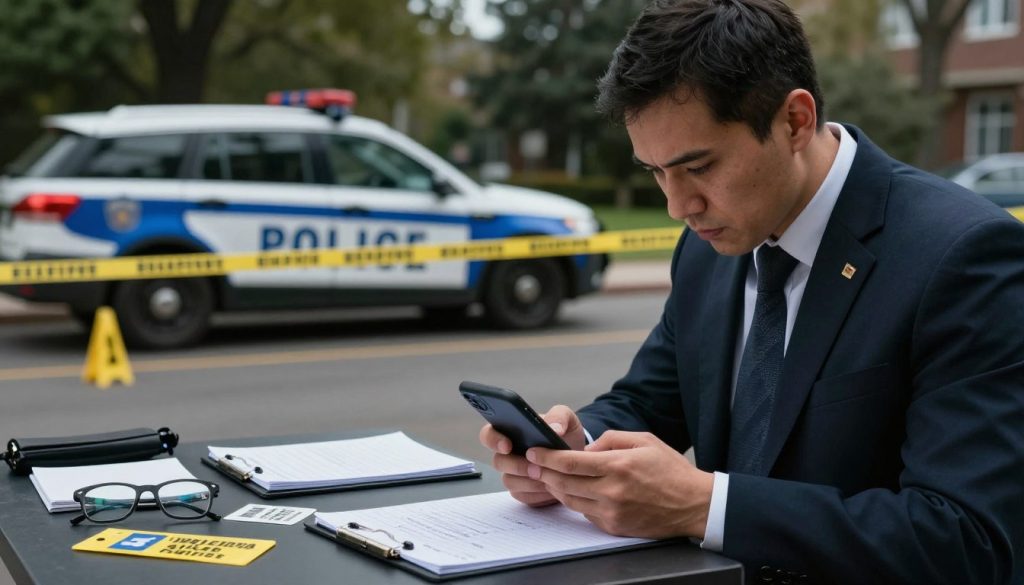
    A serious scene depicting the collection of evidence in an excessive force case. In the foreground, a professional investigator in business attire meticulously examines a smartphone, capturing relevant videos and photos, their focused expression conveying diligence. The middle ground shows a crime scene with marked evidence points, including various items such as a notepad, broken glasses, and evidence tags. Behind them, a police vehicle and discreetly placed forensic markers indicate an ongoing investigation. The environment is somber with muted colors, illuminated by soft, diffused natural light filtering through nearby trees, suggesting a thoughtful atmosphere. The focus is sharp on the evidence collection process, emphasizing the importance of preserving critical evidence.

    Request Police Reports and Body Camera Footage

    Official police reports and body camera footage are critical pieces of evidence. You or your attorney should request these documents through the appropriate channels. Police reports can provide a detailed account of the incident from the officers’ perspective, while body camera footage can offer a firsthand view of what occurred.

    When requesting these documents, be sure to follow the proper procedures and keep a record of your requests. This can help ensure that you receive the evidence in a timely manner.

    Create a Detailed Written Timeline of What Happened

    Creating a detailed timeline of the incident can help organize the evidence and provide a clear narrative of events. This timeline should include:

    • The date, time, and location of the incident
    • A step-by-step account of what happened
    • Any relevant interactions with law enforcement or other parties
    • The aftermath, including any injuries or property damage

    This timeline can be a valuable tool when discussing your case with a police misconduct lawyer or during settlement negotiations for an excessive force case settlement.

    Step 3: Find the Right Civil Rights Attorney for Your Case

    Finding a skilled civil rights attorney who specializes in excessive force legal representation is crucial for navigating the complexities of your case. The right attorney can make a significant difference in the outcome of your lawsuit.

    Why Specialized Excessive Force Legal Representation Matters

    Excessive force cases require attorneys with specific experience and knowledge. A specialized civil rights attorney understands the nuances of police misconduct litigation and can effectively build a strong case on your behalf.

    Such attorneys are well-versed in the legal standards and precedents that govern excessive force cases, allowing them to craft compelling arguments and strategies tailored to your situation.

    Important Questions to Ask During Your Initial Consultation

    When meeting with a potential civil rights attorney, it’s essential to ask the right questions to assess their suitability for your case. Consider inquiring about:

    • Their experience with excessive force cases
    • Their approach to handling police misconduct litigation
    • Their communication style and how they keep clients informed
    • Their strategy for your specific case

    Understanding Contingency Fee Arrangements and Costs

    Many civil rights attorneys work on a contingency fee basis, meaning they only receive payment if they win your case. Understanding the fee structure and any additional costs is vital to avoid unexpected expenses.

    During your initial consultation, ask about the percentage they charge and what expenses you might be responsible for, such as filing fees or expert witness costs.

    Evaluating an Attorney’s Track Record with Police Misconduct Cases

    An attorney’s past performance is a strong indicator of their ability to handle your case successfully. Look for a civil rights attorney with a proven track record of achieving favorable outcomes in excessive force cases.

    Research their history, read client testimonials, and ask for references to gauge their expertise and effectiveness in excessive force legal representation.

    Step 4: Navigate the Excessive Force Civil Litigation Process Successfully

    Navigating the complex process of excessive force civil litigation requires a clear understanding of the legal steps involved. As you move forward with your excessive force lawsuit, it’s essential to be prepared for the various stages of litigation.

    “The litigation process can be daunting, but with the right guidance, you can effectively navigate it,” says an experienced civil rights attorney. Understanding the process helps in setting realistic expectations and making informed decisions throughout your case.

    Filing Your Complaint and Meeting Critical Deadlines

    The first step in the litigation process is filing a complaint against the responsible parties. This document outlines your allegations and the damages you seek. It’s crucial to file your complaint within the statute of limitations, which varies by state. Missing this deadline can result in your case being dismissed.

    To file a complaint, you will need to gather all relevant evidence and documentation, including medical records, witness statements, and any other supporting materials. Your attorney will help you prepare this document to ensure it meets all legal requirements.

    A professional lawyer and a client sitting at a large wooden conference table in a modern law office, surrounded by files and legal documents related to excessive force civil litigation. The lawyer, dressed in a sharp navy suit, gestures confidently while explaining the litigation process, their expression serious yet supportive. The client, wearing business casual attire, appears attentive and engaged, taking notes on a notepad. In the background, shelves filled with law books and framed legal certificates decorate the office, and a large window allows soft, natural light to illuminate the scene. The atmosphere conveys a sense of determination and professionalism, emphasizing the importance of navigating the legal process successfully in an excessive force case. Use a slightly elevated angle to represent the environment and create depth.

    What Happens During the Discovery Phase

    After filing your complaint, the case proceeds to the discovery phase. During this stage, both parties exchange information and evidence. This may include:

    • Interrogatories: written questions that must be answered under oath.
    • Depositions: sworn testimony from witnesses and parties involved.
    • Requests for production: seeking documents, electronically stored information, or tangible items.

    The discovery phase is critical for building a strong case, as it allows both sides to gather necessary evidence and testimony.

    Preparing for Depositions and Pre-Trial Procedures

    Depositions are a crucial part of the litigation process. During a deposition, you will be questioned by the opposing attorney, and your testimony will be recorded. It’s essential to prepare thoroughly for depositions with your attorney to ensure you understand the process and can provide clear, consistent testimony.

    Pre-trial procedures may also include motions to exclude certain evidence or witnesses. Your attorney will guide you through these processes, ensuring that your rights are protected.

    “Preparation is key to success in depositions and pre-trial procedures. With the right strategy, you can effectively present your case,” notes a seasoned litigator.

    Weighing Settlement Negotiations Against Going to Trial

    As your case progresses, you may be presented with settlement offers. It’s crucial to weigh these offers carefully, considering the potential outcomes of going to trial. Settlement negotiations can provide a quicker resolution and avoid the uncertainties of a trial, but they may not always result in the outcome you desire.

    Your attorney will help you evaluate settlement offers and advise on the best course of action based on the specifics of your case.

    Understanding Excessive Force Compensation and Settlement Outcomes

    Knowing what constitutes excessive force compensation is the first step towards seeking justice. When law enforcement officers overstep their authority, victims have the right to seek compensation for their suffering. This section will guide you through the aspects of compensation and settlement in excessive force cases.

    Types of Damages Available in Your Excessive Force Lawsuit

    Victims of excessive force can claim various types of damages. These include:

    • Compensatory Damages: These cover actual losses such as medical expenses, lost wages, and pain and suffering.
    • Punitive Damages: Intended to punish the defendant for their actions, these damages are awarded when the conduct is deemed reckless or egregious.

    Understanding these categories is crucial for determining the potential value of your claim.

    Key Factors That Impact Your Excessive Force Case Settlement Amount

    Several factors influence the settlement amount in excessive force cases. These include:

    1. The severity of the injuries sustained
    2. The extent of the violation of constitutional rights
    3. The impact on the victim’s quality of life
    4. The conduct of the law enforcement officers involved

    Each case is unique, and the settlement amount is determined based on the specifics of the incident.

    Setting Realistic Expectations for Compensation

    It’s essential to have realistic expectations when pursuing compensation. An experienced attorney can help you understand the potential outcomes based on similar cases and the specifics of your situation.

    Factors such as the strength of evidence, the jurisdiction, and the defendant’s willingness to settle play significant roles in determining the outcome.

    Typical Timeline From Filing to Resolution

    The timeline for resolving an excessive force case can vary significantly. It depends on factors such as the complexity of the case, the court’s schedule, and whether the case settles out of court or goes to trial.

    Generally, these cases can take anywhere from a few months to several years to resolve. Patience and persistence are key.

    Conclusion

    Navigating the complexities of excessive force civil litigation requires a clear understanding of your rights and the legal steps available to you. If you’ve been a victim of police brutality, seeking excessive force legal advice from a qualified attorney is crucial.

    A police brutality lawsuit can help you secure compensation for the harm you’ve suffered. By understanding the process and gathering critical evidence, you can build a strong case.

    When facing the aftermath of an excessive force incident, it’s essential to act promptly and seek professional guidance to ensure your rights are protected throughout the legal process.

    FAQ

    What legally defines excessive force in civil litigation?

    In the realm of excessive force civil litigation, force is considered “excessive” when a law enforcement officer uses more physical power than is objectively reasonable to handle a specific situation. To determine this, courts look at the “reasonableness standard,” which evaluates the severity of the alleged crime, whether the suspect posed an immediate threat, and if the suspect was actively resisting or attempting to flee.

    How does the Fourth Amendment protect me from police misconduct?

    The Fourth Amendment of the U.S. Constitution is your primary protection against police misconduct. It guarantees your right to be free from “unreasonable searches and seizures.” When an officer uses force that is beyond what is necessary to “seize” a person, it is often viewed as a violation of these constitutional rights, providing the legal foundation for excessive force claims.

    How can I tell if I have a valid police brutality lawsuit?

    A valid police brutality lawsuit generally requires proving that the officer’s actions were not “objectively reasonable” given the facts and circumstances known to the officer at the time. If the officer used deadly force when no immediate threat of death or serious injury existed, or used physical violence against a person who was already restrained, you may have a strong case for a civil rights violation.

    What immediate actions should I take after an excessive force incident?

    Your health and your legal rights are the priorities. First, seek medical treatment immediately and ensure the healthcare provider documents every injury in detail. Second, take photos of your injuries and the scene if possible. Third, contact a civil rights attorney as soon as you are safe to do so. Avoiding social media posts about the incident is also critical to protect your future case.

    How do I obtain body camera footage and police reports?

    Obtaining this evidence often requires a formal request through the Freedom of Information Act (FOIA) or a subpoena during the litigation process. Your police misconduct lawyer will typically handle these requests to ensure the department does not withhold or “lose” critical footage from Axon body cameras or dashboard systems that could prove your version of events.

    What should I look for when seeking excessive force legal representation?

    When searching for excessive force legal representation, look for an attorney with a dedicated focus on civil rights and a documented history of success in similar cases. Ask about their experience with the specific police department involved and their familiarity with the local federal court system. You want someone who is not afraid to take a case all the way to a jury trial if necessary.

    How do contingency fee arrangements work in these cases?

    Most reputable attorneys handling an excessive force lawsuit work on a contingency fee basis. This means you do not pay any upfront legal fees. The attorney only gets paid if they successfully secure an excessive force case settlement or win a verdict at trial. This allows victims of misconduct to access high-quality legal help regardless of their current financial situation.

    What is the “Discovery Phase” of the litigation process?

    The discovery phase is a critical period where both sides exchange information. Your lawyer will request internal affairs records, training manuals, and officer disciplinary histories. You may also undergo a deposition, which is a recorded question-and-answer session. This phase is essential for uncovering the evidence needed to build a persuasive argument for excessive force compensation.

    What types of damages can I recover in an excessive force case?

    Victims can pursue various forms of excessive force compensation, including “compensatory damages” for medical bills, lost wages, and pain and suffering. In cases where the officer’s conduct was particularly malicious or reckless, “punitive damages” may also be awarded to punish the wrongdoer and deter similar conduct in the future.

    Where can I get reliable excessive force legal advice if I’m unsure about my case?

    The best way to get accurate excessive force legal advice is through a free initial consultation with a qualified lawyer. They can review the facts of your incident, help you understand the statutes of limitations in your state, and determine if the officer’s actions crossed the line of legal authority. Organizations like the American Civil Liberties Union (ACLU) also provide resources for those seeking to understand their rights.
  • Navigating Police Accountability Litigation: Key Insights

    Navigating Police Accountability Litigation: Key Insights

    Did you know that the twenty largest cities in the United States spent over three billion dollars on legal settlements in the last decade? This staggering figure shows why understanding these legal matters is so vital for everyone involved. It highlights a growing need for transparency within our justice system today.

    Navigating through police accountability litigation cases can feel like walking through a complex maze. There are many rules and local laws that change how these situations are handled in court. Staying informed is the first step toward achieving a fair result for all parties.

    This guide will help you understand the basics of these significant legal challenges. We want to provide clear insights that make the process less stressful. By learning the ropes, you can better navigate the system with confidence and ease.

    Key Takeaways

    • Understanding the high financial impact of legal settlements in major cities.
    • Recognizing the importance of transparency in the modern justice system.
    • Navigating the complex maze of local laws and court procedures.
    • Learning the basics of significant legal challenges to reduce stress.
    • Developing confidence through clear insights and professional guidance.
    • Achieving fair results by staying informed on current legal landscapes.

    1. Understanding the Legal Foundations of Police Accountability Litigation Cases

    Police accountability litigation is built upon a complex interplay of federal and state laws, including Section 1983 claims and state tort law remedies. This legal framework provides the basis for individuals to seek justice for civil rights violations and law enforcement misconduct.

    Section 1983 Civil Rights Claims

    Section 1983 of the Civil Rights Act of 1871 is a crucial tool for individuals to sue government officials, including law enforcement officers, for violating their constitutional rights. This federal law provides a means for individuals to hold officers accountable for their actions.

    Constitutional Rights Protected Under Federal Law

    The rights protected under Section 1983 include the Fourth Amendment’s protection against unreasonable searches and seizures, the Eighth Amendment’s prohibition on cruel and unusual punishment, and the Fourteenth Amendment’s guarantee of equal protection under the law. These constitutional rights form the foundation of many police accountability cases.

    Requirements for Establishing a Valid Claim

    To establish a valid Section 1983 claim, plaintiffs must demonstrate that the defendant’s actions were taken under the color of state law and that these actions violated a clearly established constitutional right. The following table outlines the key elements required to establish a valid claim:

    Element Description
    Action under color of state law The defendant must have acted in their official capacity as a government official.
    Violation of a constitutional right The defendant’s actions must have violated a right protected by the Constitution.
    Clearly established right The constitutional right violated must have been clearly established at the time of the incident.

    State Tort Law Remedies

    In addition to federal claims, individuals may also pursue state tort law remedies for law enforcement misconduct. These remedies can provide additional avenues for seeking compensation for injuries or damages.

    Battery, Assault, and Intentional Infliction of Emotional Distress

    State tort law claims can include battery, assault, and intentional infliction of emotional distress. These claims allow individuals to seek damages for physical or emotional harm caused by law enforcement officers.

    Navigating State-Specific Notice Requirements

    It’s essential to understand that state tort law claims often come with specific notice requirements, which can vary significantly from one jurisdiction to another. Understanding these requirements is crucial for successfully filing a claim

    The Qualified Immunity Doctrine

    The qualified immunity doctrine is a legal principle that protects government officials, including law enforcement officers, from liability for civil damages unless their actions clearly violated established constitutional rights.

    How Qualified Immunity Protects Officers

    Qualified immunity shields officers from the financial burdens of litigation unless their conduct was objectively unreasonable and violated clearly established rights. This doctrine is intended to protect officers who make reasonable decisions in the course of their duties.

    Strategies for Overcoming This Defense

    To overcome a qualified immunity defense, plaintiffs must demonstrate that the officer’s actions were not only unconstitutional but also clearly established as such at the time of the incident. This requires a detailed understanding of relevant case law and the ability to argue that the officer’s conduct was not objectively reasonable.

    2. Identifying and Categorizing Your Police Misconduct Legal Case

    The process of identifying and categorizing police misconduct legal cases is critical for determining the appropriate legal strategy. Police misconduct encompasses a range of behaviors, from excessive force and false arrest to First Amendment retaliation. Each category has its unique legal standards and considerations.

    Excessive Force Lawsuits

    Excessive force lawsuits are among the most common types of police misconduct cases. These cases involve allegations that law enforcement officers used more force than necessary, resulting in injury or harm to the individual.

    Objective Reasonableness Standard

    The objective reasonableness standard is a critical factor in excessive force cases. This standard assesses whether the force used by the officer was reasonable in light of the circumstances.

    Deadly vs. Non-Deadly Force Considerations

    A key distinction in excessive force cases is between deadly and non-deadly force. The legal implications and the level of scrutiny applied can vary significantly depending on whether the force used was deadly or not.

    A somber and reflective scene depicting an office environment focused on police accountability litigation. In the foreground, a diverse group of three professionals—two men and one woman—are seated around a conference table, engaged in serious discussion, dressed in smart business attire. Papers and legal documents are spread across the table, highlighting aspects of excessive force cases. The middle ground shows a large whiteboard filled with key phrases and diagrams categorizing police misconduct cases. In the background, a subtle image of a city skyline through a large window emphasizes the connection to law enforcement. Soft, diffused lighting casts an even glow over the scene, creating an atmosphere of urgency and determination. The focus is on professionalism and the importance of justice.

    False Arrest and Unlawful Search Claims

    False arrest and unlawful search claims are another significant category of police misconduct cases. These involve allegations that law enforcement officers made an arrest without probable cause or conducted a search without a valid warrant or justification.

    Probable Cause Deficiencies

    A crucial element in false arrest claims is the presence or absence of probable cause. If an arrest was made without sufficient evidence or justification, it may be considered unlawful.

    Warrantless Search Violations

    Warrantless searches are subject to strict legal scrutiny. For a warrantless search to be lawful, it must fall under one of the recognized exceptions to the warrant requirement.

    First Amendment Retaliation Cases

    First Amendment retaliation cases involve allegations that law enforcement officers took action against an individual in retaliation for the exercise of their First Amendment rights, such as free speech or assembly.

    Proving Retaliatory Motive

    A key challenge in First Amendment retaliation cases is proving that the law enforcement action was motivated by a desire to retaliate against the individual for their protected activity.

    Protected Speech and Activity

    Not all speech or activity is protected under the First Amendment. Understanding what constitutes protected speech and activity is essential for building a strong First Amendment retaliation case.

    3. Building Your Case: Evidence Collection and Preservation

    In the pursuit of justice through legal actions against police, the importance of collecting and preserving evidence cannot be overstated. A robust case is built on a foundation of thorough evidence collection, which is critical for establishing the facts and supporting claims of misconduct.

    Securing Physical and Medical Evidence

    Physical and medical evidence are crucial components of police accountability litigation. This type of evidence can include injuries sustained during an incident, medical records documenting treatment, and any other physical evidence related to the case.

    Documenting Injuries Immediately

    It is essential to document any injuries immediately after the incident. This involves taking photographs of the injuries and seeking medical attention. Prompt documentation helps establish a clear timeline of events and the extent of injuries.

    Obtaining Complete Medical Records

    Securing comprehensive medical records is vital. These records should include details of the treatment received, diagnoses, and any follow-up care. Complete medical records provide a thorough understanding of the injuries and their impact.

    Gathering Video and Photographic Evidence

    Video and photographic evidence can significantly strengthen a case against law enforcement. This evidence can come from various sources, including body-worn cameras, surveillance cameras, and bystander videos.

    Body-Worn Camera Footage Requests

    Requesting footage from body-worn cameras can provide valuable insights into the incident. Body-worn camera footage can corroborate or contradict accounts of the event.

    Surveillance and Bystander Videos

    Surveillance footage and videos taken by bystanders can offer additional perspectives on the incident. These sources of evidence can be critical in reconstructing the events surrounding a police encounter.

    A professional setting focused on evidence collection for police accountability litigation. In the foreground, a diverse team of three professionals in business attire examines various types of evidence: photographs, documents, and digital devices, all meticulously arranged on a conference table. The middle ground features a whiteboard filled with case notes and diagrams, indicating a thorough investigative process. In the background, a window reveals a city skyline at dusk, casting a soft orange glow that enhances the serious yet hopeful atmosphere. Soft, focused lighting highlights the details of the evidence while maintaining a respectful tone. Capture this scene from a slightly elevated angle, emphasizing collaboration and dedication to building a strong case.

    Obtaining Critical Police Department Records

    Accessing police department records is a crucial step in building a case. These records can include officer disciplinary history, department policies, and training materials.

    Filing Freedom of Information Act Requests

    Filing Freedom of Information Act (FOIA) requests is a key method for obtaining police department records. FOIA requests can provide access to a wide range of documents, including those related to officer conduct and departmental policies.

    Accessing Officer Disciplinary History

    Understanding an officer’s disciplinary history can be relevant to a case. This information can help establish patterns of behavior or misconduct.

    Department Policies and Training Materials

    Reviewing department policies and training materials can provide insight into whether an officer’s actions were in line with departmental guidelines. These documents can be critical in assessing the legitimacy of an officer’s conduct during an incident.

    4. Filing Your Civil Rights Violations Lawsuit: Procedures and Timing

    When pursuing accountability in policing lawsuits, it’s crucial to navigate the complexities of filing a civil rights violations lawsuit. This process involves understanding and adhering to specific legal procedures and timelines.

    Understanding Statutes of Limitations

    The statute of limitations is a critical factor in determining the viability of a civil rights violations lawsuit. It sets the timeframe within which a lawsuit must be filed.

    Federal vs. State Claim Deadlines

    Federal and state laws often have different statutes of limitations for civil rights claims. For instance, federal claims under Section 1983 typically have a statute of limitations that is determined by the state in which the claim arises, often ranging from two to three years.

    Claim Type Federal Statute of Limitations State Statute of Limitations
    Section 1983 Claims Varies by state 2-3 years (varies by state)
    State Tort Claims N/A 1-3 years (varies by state)

    Tolling Provisions and Exceptions

    Tolling provisions can temporarily suspend or extend the statute of limitations under certain circumstances, such as the plaintiff being a minor or suffering from a disability.

    Meeting Administrative Prerequisites

    Before filing a lawsuit, certain administrative prerequisites must be met, including filing a tort claims notice and exhausting administrative remedies.

    Tort Claims Notice Requirements

    Many jurisdictions require that a tort claims notice be filed with the relevant government agency before a lawsuit can be initiated. This notice typically must be filed within a specific timeframe, often between 6 months to 1 year.

    Exhaustion of Administrative Remedies

    Some claims require the exhaustion of administrative remedies before a lawsuit can be filed. This involves pursuing all available administrative avenues, such as filing complaints with police review boards.

    Drafting a Compelling Complaint

    A well-crafted complaint is essential for initiating a successful lawsuit. It must meet plausibility pleading standards and identify all proper defendants.

    Meeting Plausibility Pleading Standards

    The complaint must contain sufficient factual allegations to state a plausible claim for relief. This requires more than mere speculation or conclusory statements.

    Identifying All Proper Defendants

    Proper defendants in a civil rights violations lawsuit may include individual officers, supervisors, and governmental entities. Identifying the correct defendants is crucial for the success of the lawsuit.

    5. Navigating Discovery and Building Your Legal Strategy

    As you progress through the litigation process in law enforcement transparency cases, navigating discovery becomes a critical component of building a robust legal strategy. This phase is crucial for uncovering evidence that can make or break your case.

    Conducting Effective Depositions

    Depositions are a cornerstone of the discovery process, allowing attorneys to gather testimony from witnesses and parties involved in the case. Effective depositions require meticulous preparation and a deep understanding of the case’s intricacies.

    Deposing Officers and Supervisors

    When deposing officers and supervisors, it’s essential to focus on their actions during the incident, their training, and any relevant policies or procedures they followed or violated. Key areas to explore include their perception of the events, their decision-making process, and any subsequent actions taken.

    Preparing Your Client for Testimony

    Preparing your client for deposition testimony is vital to ensure they provide clear, consistent, and credible statements. This involves reviewing the case facts, practicing responses to potential questions, and understanding the deposition process.

    Utilizing Document Discovery

    Document discovery is a vital component of building a strong case, providing tangible evidence that can corroborate testimony or contradict opposing claims. Effective utilization of document discovery involves identifying, obtaining, and analyzing relevant documents.

    Internal Affairs Investigation Files

    Internal Affairs investigation files can contain critical information about prior misconduct allegations against officers involved in your case. These files can help establish patterns of behavior or demonstrate a history of complaints.

    Use of Force Reports and Incident Documentation

    Use of force reports and incident documentation are crucial in understanding the officer’s account of the incident and the department’s subsequent response. These documents can provide insights into the officer’s decision-making and the department’s policies.

    Engaging Expert Witnesses

    Expert witnesses can provide critical insights and testimony that bolster your case, offering objective opinions based on their expertise. Selecting the right experts is crucial for explaining complex issues to the court.

    Law Enforcement Practices Experts

    Law enforcement practices experts can offer valuable insights into standard policing practices, helping to establish whether the officer’s actions were reasonable and in line with department policies.

    Medical and Psychological Experts

    Medical and psychological experts can provide testimony on the physical and emotional impact of the incident on your client, as well as assess the officer’s psychological state during the incident.

    Expert Type Area of Expertise Potential Testimony
    Law Enforcement Practices Standard policing practices, use of force policies Whether the officer’s actions were reasonable and in line with department policies
    Medical Physical injuries, medical treatment The extent and cause of your client’s physical injuries
    Psychological Psychological impact, officer’s state of mind The emotional and psychological impact on your client, and the officer’s psychological state during the incident

    6. Overcoming Challenges in Law Enforcement Accountability Cases

    Navigating the complexities of police brutality lawsuits demands a deep understanding of the legal landscape. Law enforcement accountability cases are inherently challenging due to the complexities of legal doctrines and the inherent biases that can influence the outcome.

    Defeating Qualified Immunity Motions

    One of the significant hurdles in police brutality lawsuits is the doctrine of qualified immunity, which can shield law enforcement officers from liability unless their actions clearly violated established law.

    Establishing Clearly Established Law

    To overcome qualified immunity, it is crucial to establish that the officer’s actions violated clearly established law. This involves demonstrating that the legal principle at issue was well-settled at the time of the incident.

    Demonstrating Constitutional Violations

    Furthermore, plaintiffs must show that the officer’s actions constituted a constitutional violation. This requires a thorough analysis of the facts and applicable legal precedents.

    Addressing Officer Credibility Advantages

    Law enforcement officers often have a credibility advantage in court due to their professional standing and the deference given to their testimony.

    Countering the “Blue Wall of Silence”

    The “blue wall of silence” refers to the tendency of law enforcement officers to support their colleagues, even in cases of misconduct. Countering this requires presenting objective evidence that contradicts the officer’s narrative.

    Using Objective Evidence to Support Your Narrative

    Objective evidence, such as video footage or forensic analysis, can be pivotal in supporting the plaintiff’s narrative and challenging the officer’s credibility.

    Evaluating Settlement vs. Trial Options

    Deciding whether to settle or go to trial is a critical decision in police brutality lawsuits, influenced by factors such as the strength of the evidence and the potential for a favorable verdict.

    Assessing Realistic Case Value

    Factor Settlement Trial
    Evidence Strength Less critical Crucial
    Potential Compensation Generally lower Potentially higher
    Time and Cost Less time-consuming and costly More time-consuming and costly

    Strategic Timing for Settlement Negotiations

    The timing of settlement negotiations can significantly impact the outcome. Engaging in negotiations after key evidence has been gathered can strengthen the plaintiff’s bargaining position.

    7. Conclusion

    Understanding police accountability litigation cases is crucial for individuals seeking justice for law enforcement misconduct. Throughout this article, we’ve explored the key insights and strategies necessary for navigating these complex cases.

    By recognizing the legal foundations of police accountability litigation, identifying the type of misconduct, and building a robust case through evidence collection, individuals can effectively pursue law enforcement misconduct lawsuits.

    A comprehensive understanding of the litigation process, from filing a lawsuit to navigating discovery and overcoming challenges, is vital for achieving a successful outcome in police accountability litigation cases.

    With the right knowledge and approach, individuals can hold law enforcement accountable for their actions, promoting transparency and accountability within the justice system.

    FAQ

    What is a Section 1983 claim, and why is it vital for police accountability litigation cases?

    A Section 1983 claim is a cornerstone of civil rights violations lawsuits in the United States. Derived from the Civil Rights Act of 1871, it provides a legal path for individuals to sue government officials, such as police officers, who violate their constitutional rights while acting “under color of state law.” It is vital because it allows victims to seek financial compensation and hold departments accountable for Fourth Amendment violations, such as illegal searches or seizures.

    How is “objective reasonableness” used to determine the outcome of excessive force lawsuits?

    In excessive force lawsuits, courts rely on the objective reasonableness standard established by the U.S. Supreme Court in the landmark case Graham v. Connor. Rather than looking at an officer’s intent, the court asks if a “reasonable officer” on the scene would have acted similarly under the same circumstances. Factors include the severity of the crime, whether the suspect posed an immediate threat, and if the suspect was actively resisting arrest.

    What are the most common challenges when pursuing law enforcement misconduct lawsuits?

    One of the biggest hurdles in law enforcement misconduct lawsuits is the Qualified Immunity doctrine. This legal defense protects officers from being held personally liable unless their conduct violated “clearly established law.” Overcoming this requires showing that a previous court case already ruled that specific conduct was unconstitutional. Additionally, breaking through the “Blue Wall of Silence” to secure officer testimony can be a significant challenge in police misconduct legal cases.

    How can I obtain body-worn camera footage for accountability in policing lawsuits?

    To secure video evidence for accountability in policing lawsuits, your legal team will typically file Freedom of Information Act (FOIA) requests or state-specific public records requests. In law enforcement transparency cases, obtaining this footage quickly is essential before data retention policies allow for the deletion of the files. This objective evidence is often the most persuasive tool for countering conflicting police reports.

    What should I do immediately if I intend to file one of these police brutality lawsuits?

    If you are considering police brutality lawsuits, the first step is to seek medical attention and ensure all injuries are documented with high-resolution photographs and professional medical records. You should also identify and secure contact information for any bystanders who may have witnessed the event. Promptly consulting with a specialized attorney is necessary to ensure you meet strict statutes of limitations and administrative “notice of claim” deadlines required for legal actions against police.

    Can I sue for First Amendment retaliation in police misconduct legal cases?

    Yes! You have a protected right to record police officers in public spaces or criticize their actions. If an officer arrests or uses force against you specifically because you were exercising your First Amendment rights, you may have grounds for a retaliation claim. In these police accountability litigation cases, the key is proving a “retaliatory motive”—showing that the officer’s actions were a direct response to your protected speech or activity.

    What is the difference between federal and state remedies in legal actions against police?

    While federal civil rights violations lawsuits focus on constitutional breaches, state tort law offers remedies for actions like battery, assault, or intentional infliction of emotional distress. Often, a comprehensive legal strategy involves “pendant jurisdiction,” where both federal and state claims are brought together in the same lawsuit to maximize the potential for justice and recovery.

    How do expert witnesses help in law enforcement transparency cases?

    Expert witnesses are crucial in law enforcement transparency cases because they provide specialized knowledge on police training, tactics, and use-of-force standards. A former police chief or a use-of-force expert can testify whether an officer’s actions deviated from standard operating procedures, while medical experts can link specific injuries to the force used, providing a clear narrative for the jury in excessive force lawsuits.
  • Navigating Modern Civil Rights Lawsuits: Key Insights

    Navigating Modern Civil Rights Lawsuits: Key Insights

    Did you know that federal courts in the United States handle over 30,000 filings related to personal liberties every single year? This staggering number shows just how active the pursuit of justice has become in our country. It is a clear sign that people are standing up for their protected interests more than ever before.

    Dealing with modern civil rights lawsuits can often feel like trying to solve a puzzle with moving pieces. These legal battles frequently touch on very personal issues that require a careful and sensitive approach. Understanding the rules helps you stay prepared for whatever comes your way.

    We want to help you understand the basics of these important legal actions today. Our goal is to provide a friendly guide that makes the complex world of litigation much easier to grasp. You deserve to feel confident when navigating the legal landscape in the United States.

    Key Takeaways

    • Federal court filings for liberty issues are reaching record highs.
    • Legal cases require a deep understanding of current federal standards.
    • Proper preparation is the best way to handle a legal dispute.
    • Expert guidance can help simplify the complex litigation process.
    • Recent court decisions continue to shape how we view personal justice.
    • Knowledge of your legal standing is essential for a fair outcome.

    Understanding Modern Civil Rights Lawsuits in Today’s Legal Landscape

    The landscape of civil rights lawsuits has undergone significant changes in recent years, reflecting evolving societal norms and legal precedents. This evolution has led to a more nuanced understanding of what constitutes a civil rights violation and has expanded the scope of legal protections afforded to individuals.

    What Constitutes a Civil Rights Violation Today

    A civil rights violation occurs when an individual or entity infringes upon the rights protected by the Constitution or federal law. These rights include, but are not limited to, freedom from discrimination based on race, gender, age, disability, and other protected characteristics. Today, civil rights violations can manifest in various contexts, including employment, housing, education, and interactions with law enforcement.

    The legal definition of civil rights violations continues to evolve, with courts regularly interpreting and applying constitutional and statutory provisions to new and emerging issues. For instance, recent years have seen significant legal developments regarding LGBTQ+ rights, the rights of individuals with disabilities, and protections against racial and ethnic discrimination.

    Types of Modern Civil Rights Legal Cases

    Civil rights legal cases encompass a broad range of issues. Some common types include:

    • Employment discrimination cases, where individuals face unfair treatment based on protected characteristics.
    • Police misconduct cases, involving allegations of excessive force, false arrest, or other abuses of authority.
    • Housing discrimination cases, where individuals are unfairly denied housing or face unequal treatment in the housing market.
    • Education cases, involving issues such as discrimination against students with disabilities or unequal access to educational resources.

    These cases often involve complex legal and factual issues, requiring a deep understanding of both the law and the specific circumstances of each case.

    How Civil Rights Litigation Has Evolved in Recent Years

    Civil rights litigation has undergone significant changes in response to shifting societal values, new legislation, and landmark court decisions. Recent civil rights law updates have expanded protections in areas such as disability rights and LGBTQ+ rights, while also addressing emerging issues like digital privacy and online harassment.

    The legal landscape is also influenced by changes in the composition of the judiciary and shifts in the interpretation of existing laws. As a result, civil rights litigation continues to adapt, with lawyers and courts navigating these changes to advocate for and protect individual rights.

    Recognizing When You Have a Valid Civil Rights Claim

    Identifying a valid civil rights claim requires a thorough understanding of your rights and the circumstances surrounding your case. Civil rights laws are designed to protect individuals from discrimination and ensure equal opportunities under the law.

    Common Scenarios That Warrant Legal Action

    Certain situations are more likely to involve civil rights violations. These include workplace discrimination, police misconduct, and unequal access to public accommodations. For instance, being denied a job or promotion based on your race, gender, or age could be a valid reason for a civil rights claim.

    Protected Classes and Rights Under Federal Law

    Federal law protects various classes from discrimination, including race, color, national origin, sex, pregnancy, age, disability, and genetic information. Understanding these protections is crucial in identifying potential civil rights violations.

    Red Flags That Indicate a Potential Case

    Several indicators can suggest you have a valid civil rights case. These include experiencing retaliation after reporting a violation, being subjected to harassment, or facing unequal treatment compared to others in similar situations.

    Documentation You Should Start Collecting Immediately

    To build a strong case, it’s vital to gather and document evidence. This includes records of incidents, communication logs, and witness statements. The more detailed your documentation, the stronger your case will be.

    Step 1: Gathering Evidence and Building Your Foundation

    Building a solid case in recent civil rights litigation starts with collecting and organizing the right evidence. This foundational step is crucial for establishing the facts of your case and supporting your claims.

    Essential Types of Evidence for Civil Rights Cases

    Civil rights cases often rely on various types of evidence to prove violations of rights. Understanding what constitutes strong evidence is vital.

    Written Documentation and Email Communications

    Written records, including emails, letters, and internal memos, can serve as powerful evidence. They provide a paper trail that can help establish patterns of behavior or discriminatory practices.

    Witness Statements and Testimonies

    Witnesses can offer firsthand accounts of incidents or behaviors relevant to your case. Their testimonies can corroborate your claims and add credibility to your evidence.

    Digital Evidence and Social Media Records

    In today’s digital age, social media posts, online communications, and other digital records can be critical evidence. They can provide insights into the context and circumstances surrounding your case.

    Creating a Detailed Timeline of Events

    A chronological timeline of events is indispensable in civil rights cases. It helps to clarify the sequence of events, identify key dates, and establish causation.

    To create an effective timeline:

    • Document every relevant event, no matter how minor it may seem.
    • Include dates, times, locations, and the individuals involved.
    • Correlate your timeline with other evidence, such as documents and witness statements.

    Organizing Your Evidence Effectively

    Once you have gathered evidence, organizing it in a coherent and accessible manner is crucial. This involves categorizing documents, labeling evidence, and ensuring that all materials are securely stored.

    Evidence Type Description Importance
    Written Documentation Includes emails, letters, and internal memos. High
    Witness Statements Firsthand accounts from witnesses. High
    Digital Evidence Social media posts, online communications. Medium to High

    Step 2: Finding and Hiring the Right Civil Rights Attorney

    The process of selecting the right civil rights attorney is a critical step in pursuing your case effectively. Your attorney will be your advocate, guide, and legal expert throughout the litigation process.

    Qualities to Look for in Experienced Civil Rights Lawyers

    When searching for a civil rights attorney, it’s crucial to identify lawyers with a strong background in handling civil rights legal cases. Look for attorneys who have:

    • Extensive experience in civil rights litigation
    • A proven track record of successful outcomes
    • Familiarity with relevant federal and state laws
    • Excellent communication and negotiation skills

    An experienced civil rights attorney will be able to assess the merits of your case and provide guidance on the best course of action.

    Critical Questions to Ask During Initial Consultations

    During your initial consultation with a potential civil rights attorney, it’s essential to ask the right questions to gauge their suitability for your case. Some critical questions to ask include:

    1. What experience do you have with cases similar to mine?
    2. How will you approach my case, and what strategies do you recommend?
    3. How will you communicate with me throughout the litigation process?
    4. What are the potential risks and challenges associated with my case?

    Pay attention to the attorney’s responses and assess their level of expertise and commitment to your case.

    Understanding Fee Structures and Payment Options

    Before hiring a civil rights attorney, it’s vital to understand their fee structure and payment options. Many civil rights attorneys work on a contingency fee basis, meaning they only receive payment if they win your case.

    Contingency fees can vary, but they typically range between 25% to 40% of the total award. Some attorneys may also charge hourly rates or flat fees for specific services.

    Fee Structure Description Typical Range
    Contingency Fee Percentage of the total award if the case is won 25% – 40%
    Hourly Rate Charges based on the number of hours worked Varies
    Flat Fee A fixed amount for specific services Varies

    What to Expect from the Attorney-Client Relationship

    When you hire a civil rights attorney, you can expect a professional and dedicated advocate to represent your interests. Your attorney will:

    • Provide guidance on the litigation process and potential outcomes
    • Develop a strategy tailored to your case
    • Communicate regularly with you regarding case developments
    • Represent you in court and during settlement negotiations

    A professional civil rights attorney, dressed in business attire, sits at a modern desk in a well-lit office, examining legal documents. The foreground features a close-up of a gavel and law books, symbolizing justice and the legal system. In the middle, the attorney is focused and engaged, perhaps discussing details with a client, who is seated across from them, dressed in smart casual attire, conveying a sense of partnership and trust. The background showcases a large bookshelf filled with legal texts and framed civil rights achievements, enhancing the atmosphere of expertise and dedication. Soft natural light streams through a window, casting gentle shadows and creating a warm, inviting mood, emphasizing the importance of finding the right attorney in civil rights cases.

    By understanding what to expect from your attorney, you can build a strong working relationship and navigate the complexities of your civil rights case with confidence.

    Step 3: Filing Your Complaint and Navigating Initial Procedures

    The process of filing a complaint in a civil rights case involves several key steps that are essential for navigating the complexities of modern civil rights lawsuits. This phase is critical as it sets the stage for the legal proceedings ahead.

    Understanding Administrative Remedies and EEOC Requirements

    Before filing a complaint in court, it’s often necessary to exhaust administrative remedies. This typically involves filing a complaint with the relevant agency, such as the Equal Employment Opportunity Commission (EEOC) for employment-related civil rights violations.

    Key steps in the administrative process include:

    • Filing a charge with the EEOC within the required timeframe
    • Providing detailed information about the alleged violation
    • Cooperating with the agency’s investigation

    Statutes of Limitations You Must Know

    Civil rights lawsuits are subject to statutes of limitations, which vary by jurisdiction and type of claim. Understanding these time limits is crucial to preserving your right to file a lawsuit.

    Some key considerations include:

    1. The specific statute of limitations for your type of claim
    2. The date when the statute of limitations begins to run
    3. Any potential tolling or exceptions that may apply

    The Federal Court Filing Process Explained

    Filing a complaint in federal court involves several steps, including drafting the complaint, filing it with the court, and serving the defendant.

    Drafting a Strong Complaint

    A well-crafted complaint is essential for stating your claims effectively. It should include a clear statement of the facts, the legal grounds for your claims, and the relief you are seeking.

    Proper Service of Process

    After filing the complaint, you must serve the defendant with a summons and a copy of the complaint. This step is critical for establishing the court’s jurisdiction over the defendant.

    Defendant Response and Next Steps

    Once served, the defendant will have a specified period to respond to the complaint. The case will then proceed to the next stages, which may include discovery, motions, and potentially a trial.

    Learning from Landmark Civil Rights Lawsuits and Recent Civil Rights Litigation

    By examining landmark civil rights lawsuits and recent litigation, individuals can gain valuable insights into the legal mechanisms that safeguard their rights. This understanding is crucial for navigating the complex landscape of civil rights law.

    Significant Cases That Shaped Modern Precedent

    Landmark civil rights lawsuits have played a pivotal role in shaping the legal precedents that govern modern civil rights law. Cases such as Brown v. Board of Education and Loving v. Virginia have had lasting impacts on the legal landscape.

    “The impact of landmark cases like Brown v. Board of Education cannot be overstated. They have paved the way for significant advancements in civil rights.”

    These cases have not only resolved specific disputes but have also set important legal precedents that continue to influence current civil rights litigation.

    Landmark Case Year Impact
    Brown v. Board of Education 1954 Declared segregation in public schools unconstitutional
    Loving v. Virginia 1967 Struck down laws banning interracial marriage
    Roe v. Wade 1973 Established a woman’s right to choose

    Recent Civil Rights Law Updates and Their Practical Impact

    Recent civil rights litigation has led to significant updates in civil rights law, reflecting the evolving nature of societal issues and legal challenges. For instance, updates in laws related to LGBTQ+ rights and disability rights have expanded the scope of protections under civil rights law.

    Recent Updates:

    • Expansion of protections under Title VII to include sexual orientation and gender identity
    • Enhanced accessibility requirements under the Americans with Disabilities Act (ADA)

    Emerging Trends in Current Civil Rights Legal Cases

    Emerging trends in civil rights legal cases reflect the changing societal landscape and the ongoing challenges in protecting individual rights. Issues such as police brutality, systemic racism, and discrimination in the workplace are at the forefront of current civil rights litigation.

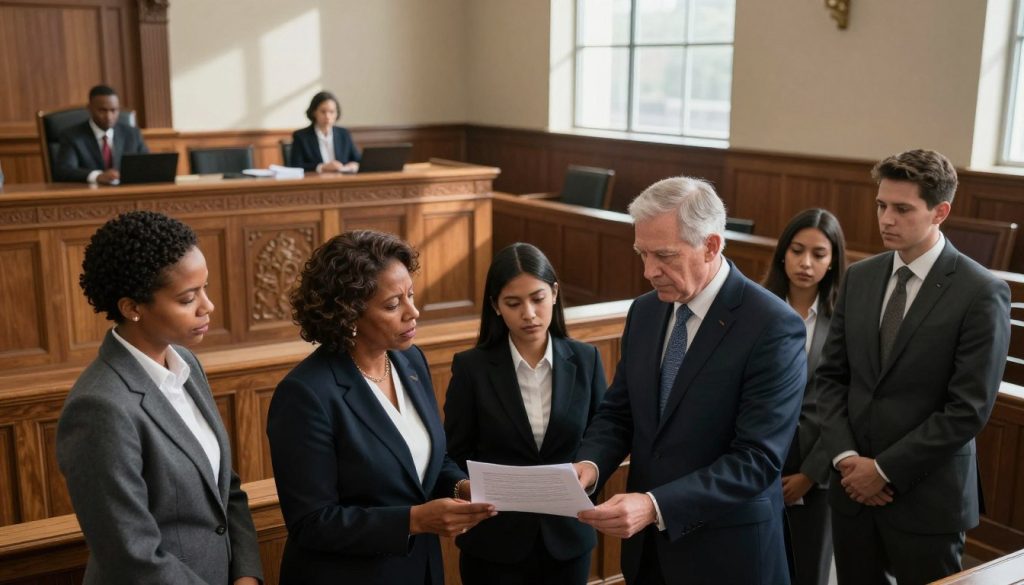
    A powerful scene that captures the essence of landmark civil rights lawsuits, set in a courthouse. In the foreground, a diverse group of individuals, including a middle-aged Black woman, a young Latina man, and an older White man, all dressed in professional business attire, look determined as they discuss legal documents. In the middle ground, a grand courtroom, with wooden benches and intricate architectural details, highlighting judicial symbolism. The background features a large window, allowing soft sunlight to filter through, illuminating the room and casting dramatic shadows. The atmosphere is intense yet hopeful, reflecting the fight for justice. Use a high angle perspective to emphasize the importance of the moment, conveying a sense of gravitas and inspiration.

    How Past Cases Can Strengthen Your Arguments

    Understanding past landmark civil rights lawsuits and recent litigation can significantly strengthen current arguments in civil rights cases. By drawing on established legal precedents and recent developments, individuals can build more robust legal strategies.

    For example, referencing landmark cases can provide a historical context that supports current claims, while recent litigation can offer insights into how courts are currently interpreting civil rights law.

    Overcoming Common Challenges in Civil Rights Litigation

    The path to justice in civil rights litigation is frequently paved with challenges. Plaintiffs must be prepared to face various obstacles that can significantly impact the outcome of their case.

    Dealing with Qualified Immunity Defenses

    One significant hurdle is the defense of qualified immunity, which can be invoked by government officials. Qualified immunity shields officials from liability unless they have violated a clearly established constitutional right.

    To overcome this defense, it’s crucial to:

    • Demonstrate that the right violated was clearly established at the time of the incident
    • Show that the official’s actions were not objectively reasonable
    • Gather evidence that highlights the egregious nature of the violation

    Managing the Emotional and Financial Toll

    Civil rights litigation can be emotionally draining and financially burdensome. Plaintiffs often experience stress, anxiety, and other emotional challenges.

    Managing these aspects is crucial for maintaining the strength to pursue a case. Consider:

    1. Seeking support from family, friends, or professional counselors
    2. Understanding the financial implications and exploring options for managing costs
    3. Working with an attorney who can provide guidance on the litigation process

    Evaluating Settlement Offers Versus Going to Trial

    At some point, plaintiffs may be presented with a settlement offer. It’s essential to weigh the pros and cons of accepting a settlement versus proceeding to trial.

    Key considerations include:

    • The strength of the evidence supporting the case
    • The potential compensation versus the settlement offer
    • The emotional toll of continuing litigation

    Protecting Yourself from Retaliation During Your Case

    Retaliation is a significant concern for individuals pursuing civil rights legal cases. It’s vital to take proactive steps to protect oneself.

    Strategies for protection include:

    • Documenting any incidents of retaliation
    • Informing your attorney about any potential retaliation
    • Seeking legal remedies if retaliation occurs

    By understanding and addressing these challenges, plaintiffs in civil rights legal cases can better navigate the litigation process.

    Conclusion

    Navigating modern civil rights lawsuits requires a comprehensive understanding of the legal landscape and the complexities involved. Throughout this article, we’ve explored the various aspects of civil rights litigation, from recognizing valid claims to overcoming common challenges.

    Understanding the evolution of modern civil rights lawsuits and the key elements that constitute a civil rights violation is crucial. By knowing how to gather evidence, find the right attorney, and navigate the legal process, individuals can effectively pursue their claims.

    As civil rights continue to evolve, staying informed about recent legal updates and landmark cases is essential. This knowledge empowers individuals to assert their rights and seek justice when faced with civil rights violations.

    By being aware of the steps involved in modern civil rights lawsuits, individuals can better protect their rights and navigate the legal system with confidence.

    FAQ

    What exactly defines modern civil rights lawsuits in today’s legal environment?

    Modern civil rights lawsuits are legal actions taken to protect individuals against discrimination, harassment, or the violation of constitutional rights by government entities, employers, or private businesses. Unlike the cases of the mid-20th century, today’s civil rights legal cases often focus on intersectional discrimination, digital privacy rights, and systemic biases within automated systems or algorithms used by major corporations like Amazon or Google.

    How have recent civil rights litigation trends changed the way cases are handled?

    In recent years, recent civil rights litigation has become increasingly reliant on digital footprints. Attorneys now prioritize gathering evidence from social media records, encrypted messaging apps like WhatsApp, and internal corporate communication platforms like Slack. Furthermore, courts are seeing a rise in “impact litigation,” where organizations like the ACLU or the NAACP file suits intended to change broad policies rather than just seeking individual compensation.

    Why are landmark civil rights lawsuits from the past still relevant to my current case?

    Landmark civil rights lawsuits provide the essential legal foundation, known as precedent, that judges use to make decisions today. For instance, the Supreme Court’s ruling in Bostock v. Clayton County significantly expanded protections for LGBTQ+ employees under the Civil Rights Act of 1964. Referencing these historic victories helps your lawyer argue that your rights are firmly established by existing law, making your position much stronger during negotiations or trial.

    What are the most important civil rights law updates I should be aware of this year?

    Keeping up with civil rights law updates is crucial because regulations change frequently. Recently, there has been a significant push at the federal level to strengthen the Pregnant Workers Fairness Act and to clarify protections under Title IX regarding gender identity. Staying informed about these shifts ensures you don’t miss out on new protections that might apply to your specific situation in the workplace or educational institutions.

    How do I know if I have a valid claim for recent civil rights litigation?

    A valid claim typically exists if you are a member of a protected class—such as race, religion, sex, or disability—and have suffered an “adverse action” due to that status. Common red flags include sudden termination after disclosing a pregnancy, being denied housing by a company like Zillow due to source of income, or experiencing excessive force by law enforcement. If you feel your fundamental fairness has been compromised, it is worth consulting a specialist to see if it fits the criteria for modern civil rights lawsuits.

    What is the first step I should take if I believe my civil rights have been violated?

    Your first priority should be documentation. Start a detailed log of every interaction, including dates, times, and the names of everyone involved. Save every email, performance review, or text message. Before filing a formal lawsuit, you may also need to file a “Charge of Discrimination” with the Equal Employment Opportunity Commission (EEOC) or a similar state agency, as this is often a mandatory prerequisite for many civil rights legal cases.

    What are the biggest challenges when pursuing civil rights legal cases against government officials?

    One of the most significant hurdles in modern civil rights lawsuits involving government actors is the defense of qualified immunity. This legal doctrine can shield government officials from liability unless it can be proven they violated a “clearly established” statutory or constitutional right. Overcoming this requires a highly skilled attorney who can find specific parallels in landmark civil rights lawsuits to prove that the official should have known their actions were unlawful.

    How do I find an attorney who specializes in modern civil rights lawsuits?

    You should look for a firm with a proven track record in recent civil rights litigation and specific experience in the area of your claim, whether that’s police misconduct or employment law. Check reputable directories like Martindale-Hubbell or the National Police Accountability Project for recommendations. During your consultation, ask about their experience with civil rights law updates and their willingness to take a case to trial if a fair settlement isn’t offered by the opposing party.