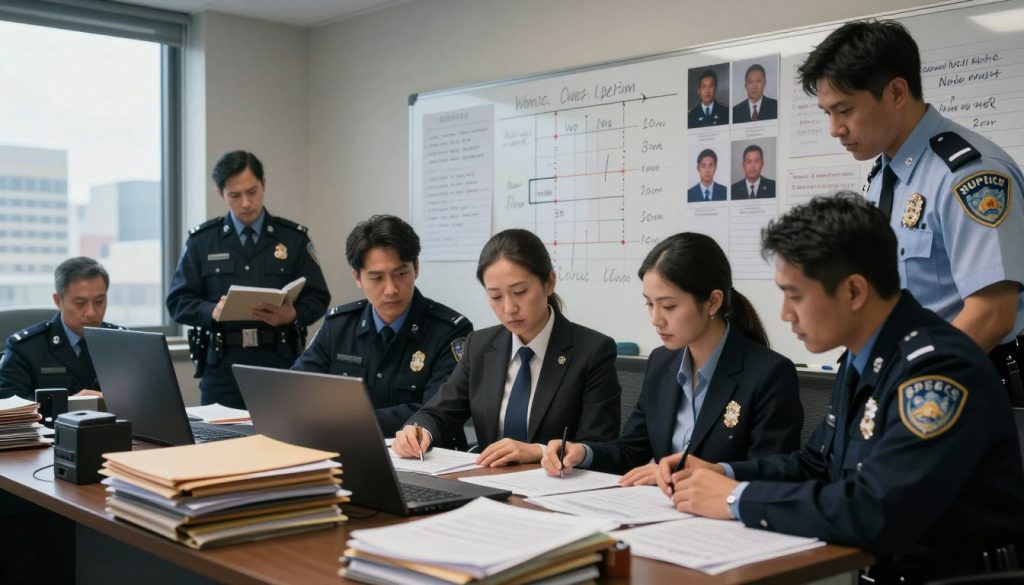
Category: Law Enforcement Accountability

  • Independent Police Oversight: Reforms for Accountability

    Independent Police Oversight: Reforms for Accountability

    Did you know there are over 18,000 law enforcement agencies across the United States? Despite this massive number, only a small fraction of these departments have external systems to review their actions. This lack of scrutiny can often create a gap in public trust.

    Building a strong bond between residents and those who protect them is vital for a healthy community. Honesty and open dialogue pave the way for a more secure and just future for everyone. Trust is the foundation of effective public service.

    In this guide, we explore how independent police oversight reforms can change the way local departments operate. These improvements foster a culture of transparency and respect for all neighbors. They help ensure that every action remains visible and fair.

    Better systems help agencies work with the public rather than apart from them. Let’s dive into the essential steps needed to achieve true accountability. We will look at how clear rules improve safety for every citizen.

    Key Takeaways

    • Transparency increases public confidence in local authorities.
    • External review boards provide unbiased views on department conduct.
    • Stronger rules help protect both the citizens and the officers.
    • Data-driven changes lead to safer and more peaceful neighborhoods.
    • Local involvement is key to achieving lasting structural success.
    • Public trust improves when monitoring systems are open and fair.

    Understanding the Need for Law Enforcement Accountability Measures

    Ensuring accountability within law enforcement is vital for maintaining public trust and safety. The relationship between law enforcement agencies and the communities they serve has become increasingly strained, highlighting the need for effective accountability measures.

    The Current Crisis in Police-Community Relations

    The current state of police-community relations is marked by tension and mistrust. Incidents of police misconduct have sparked widespread protests and calls for reform. Restoring trust requires a multifaceted approach that includes transparent and independent oversight mechanisms. Communities are demanding more than just promises of change; they are seeking tangible actions that demonstrate a commitment to accountability.

    Why Internal Police Reviews Cannot Ensure Accountability

    Internal police reviews often fall short in ensuring accountability due to inherent biases and limitations. These reviews may lack the independence and transparency needed to thoroughly investigate allegations of misconduct. As a result, they can fail to provide the public with confidence that allegations are being taken seriously and addressed appropriately.

    The Impact of Oversight Gaps on Public Trust and Safety

    Oversight gaps can have significant consequences for both public trust and safety. When law enforcement agencies are not held accountable for their actions, it can lead to a breakdown in community trust. This mistrust can manifest in decreased cooperation between the public and law enforcement, potentially leading to increased crime rates and reduced public safety.

    Building the Foundation for Independent Police Oversight Reforms

    Building a robust system for independent police oversight requires a multifaceted approach that addresses several key elements. This involves creating a framework that is not only effective but also sustainable and fair. As Justice Ruth Bader Ginsburg once said, “Real change, enduring change, happens one step at a time.” Therefore, understanding and implementing these foundational elements is crucial for achieving meaningful reform.

    A diverse group of professionals assembled in a modern conference room, symbolizing oversight of law enforcement agencies. In the foreground, three individuals in professional business attire discuss important documents, emphasizing collaboration. The middle ground shows a digital screen displaying statistics on police accountability and reform initiatives, highlighted in soft blue lighting. The background features a large window with a view of a cityscape, bathed in warm afternoon sunlight. The atmosphere conveys serious determination and hope for change, creating a sense of purpose and accountability. Use a wide-angle lens for an expansive view, capturing both the intensity of the meeting and the inspiring urban backdrop.

    Defining Genuine Independence from Law Enforcement Agencies

    Genuine independence is the cornerstone of effective police oversight. It means that the oversight body must be free from any influence or control by the law enforcement agency it is overseeing. This can be achieved by ensuring that the oversight body has its own budget, staffing, and decision-making authority.

    “Independence is not just about structural separation; it’s also about the perception of independence.” This perception is crucial for maintaining public trust. To achieve this, the oversight body’s operations, decision-making processes, and investigations should be transparent and subject to public scrutiny.

    Securing Legal Authority and Investigative Powers

    For an oversight body to be effective, it must have the legal authority to investigate complaints against law enforcement officers and agencies. This includes having the power to subpoena documents and witnesses, as well as the authority to make recommendations or take disciplinary actions.

    Securing legal authority involves working with lawmakers and other stakeholders to enact legislation that grants the necessary powers to the oversight body. As noted by experts,

    “The effectiveness of civilian review boards largely depends on their legal authority and the scope of their investigative powers.”

    Allocating Sufficient Budget and Staffing Resources

    Adequate resources are essential for the effective functioning of an oversight body. This includes not only financial resources but also skilled personnel who can conduct thorough investigations and analyze data effectively.

    • A sufficient budget to cover operational costs, including investigations and community outreach.
    • Skilled staff, including investigators, analysts, and legal experts.
    • Training for staff to ensure they have the necessary skills and knowledge.

    Engaging Stakeholders and Community Leaders from the Start

    Engaging with stakeholders and community leaders is vital for building trust and ensuring that the oversight body is responsive to community needs. This includes not only community leaders but also law enforcement officials and other relevant stakeholders.

    By engaging stakeholders from the start, the oversight body can build support and ensure that its efforts are aligned with community expectations. As one community leader noted,

    “For too long, our community has felt unheard. We welcome any effort that gives us a voice in how policing is conducted.”

    Step 1: Establish Civilian Review Boards with Investigative Authority

    Creating civilian review boards with investigative powers is a key component of police reform initiatives. These boards play a vital role in ensuring that law enforcement agencies are held accountable for their actions.

    Recruit Diverse Board Members Who Reflect Your Community

    A diverse civilian review board is essential for building trust between law enforcement and the community. The board should comprise individuals from various backgrounds, including community leaders, legal experts, and representatives from local organizations.

    Diversity is crucial because it brings different perspectives to the table, ensuring that investigations are thorough and unbiased. When recruiting board members, consider factors such as their understanding of community needs, their ability to remain impartial, and their commitment to transparency.

    Grant Subpoena Power and Access to All Police Records

    To conduct effective investigations, civilian review boards must have the authority to access all relevant police records and evidence. This includes granting them subpoena power to compel witnesses to testify and obtain necessary documents.

    Having access to all police records enables the board to investigate allegations of misconduct thoroughly. It also helps to identify patterns of behavior that may indicate a need for additional training or policy changes within the law enforcement agency.

    Define Clear Investigative Protocols and Timelines

    Establishing clear investigative protocols and timelines is vital for ensuring that investigations are conducted efficiently and effectively. This includes defining the procedures for receiving and processing complaints, conducting investigations, and making recommendations for disciplinary actions.

    Clear protocols help to ensure that investigations are completed in a timely manner, reducing the likelihood of prolonged uncertainty for both the complainant and the officer involved.

    Investigative Protocol Description Timeline
    Complaint Receipt Initial review of complaint to determine jurisdiction and validity Within 3 days
    Investigation Thorough investigation of allegations, including interviews and evidence collection Within 60 days
    Recommendations Submission of findings and recommendations to the law enforcement agency Within 90 days

    Create Independence Safeguards and Conflict of Interest Rules

    To maintain the integrity of the civilian review board, it’s essential to establish safeguards that ensure their independence and impartiality. This includes implementing conflict of interest rules to prevent board members from participating in investigations where they have a personal connection to the parties involved.

    By establishing these safeguards, the civilian review board can maintain the trust of both the community and the law enforcement agency, ensuring that their investigations are fair and unbiased.

    Step 2: Implement Police Transparency Standards and Data Systems

    Transparency in policing is not just a virtue; it’s a necessity for ensuring that law enforcement actions are fair and just. As communities continue to demand more accountability from their law enforcement agencies, the implementation of robust transparency standards becomes increasingly critical.

    The journey towards transparency involves several key steps, starting with the mandate for public reporting of police misconduct investigations. This step is fundamental in ensuring that the public has access to information about how complaints against officers are handled.

    Mandate Public Reporting of Police Misconduct Investigations

    Mandating the public reporting of police misconduct investigations is a crucial step towards transparency. It involves making detailed reports on the investigations, including the findings and any subsequent actions taken, available to the public. As Commissioner James “Jim” Bueermann, President of the National Police Foundation, once said,

    “Transparency is the first step towards building trust between law enforcement and the communities they serve.”

    This level of transparency helps in building trust and demonstrates a commitment to accountability. It also allows for external oversight and scrutiny, which can lead to improved policing practices.

    Build Searchable Databases for Complaint and Discipline Records

    Another vital aspect is the creation of searchable databases for complaint and discipline records. These databases should be easily accessible to the public and contain comprehensive information on complaints filed against officers, the investigation process, and the outcomes.

    By making this information readily available, law enforcement agencies can provide insights into their operations and demonstrate their commitment to transparency. As noted by the International Association of Chiefs of Police, such databases are essential tools for promoting transparency and accountability.

    A professional meeting room focused on police transparency standards, featuring a diverse group of individuals in professional business attire. In the foreground, a confident woman of Asian descent stands near a large screen displaying graphs and data analytics related to police accountability. In the middle, a group of individuals, including a Black man and a Hispanic woman, engage in discussion, all showing expressions of determination and collaboration. The background displays a wall of infographics illustrating police transparency initiatives and data systems. Soft, natural lighting illuminates the room, enhancing a mood of optimism and professionalism. The scene is shot from a slightly elevated angle to capture the active dialogue and engagement among the participants, emphasizing a commitment to reform and accountability.

    Require Body-Worn Camera Footage Release Within Set Timeframes

    Requiring the release of body-worn camera footage within set timeframes is also a critical component of transparency. This measure ensures that the public has timely access to footage related to significant incidents, enhancing trust and accountability.

    The release of body-worn camera footage should be done in a manner that respects privacy concerns while still providing the necessary transparency. Law enforcement agencies should establish clear policies on what footage is released and when.

    Establish Annual Transparency Reports with Statistical Analysis

    Finally, establishing annual transparency reports with statistical analysis is essential for providing a comprehensive overview of law enforcement activities and outcomes. These reports should include detailed statistics on complaints, investigations, use of force incidents, and other relevant data.

    By analyzing these reports, the public and law enforcement agencies can identify trends, areas for improvement, and the effectiveness of current policies. This information is invaluable for making informed decisions about policing practices and reforms.

    Step 3: Create Enforceable Accountability in Policing Procedures

    The third step in achieving meaningful police reform involves establishing enforceable accountability within policing procedures. This step is crucial for ensuring that accountability measures are not just theoretical but are practically enforceable, leading to tangible improvements in policing.

    Design Independent Investigation Processes for Serious Incidents

    Independent investigation processes are vital for maintaining public trust and ensuring that serious incidents are handled impartially. These investigations should be conducted by entities that are separate from the law enforcement agencies involved, to avoid conflicts of interest and bias. Independent investigations help in providing unbiased outcomes, which are crucial for building trust between law enforcement and the communities they serve.

    Establish Binding Disciplinary Recommendations or Final Decision Authority

    To ensure that investigations lead to meaningful actions, it’s essential to grant the investigating bodies the authority to make binding disciplinary recommendations or have the final say in disciplinary actions. This authority ensures that the recommendations made by oversight bodies are not ignored and that there are consequences for misconduct.

    Integrate Community Policing Initiatives into Oversight Programs

    Community policing initiatives are a key component of modern policing strategies. By integrating these initiatives into oversight programs, law enforcement agencies can foster better relationships with the communities they serve. Community policing emphasizes building trust and cooperation between law enforcement and the public, which is essential for effective policing.

    • Regular community meetings
    • Transparency in policing practices
    • Collaborative problem-solving

    Develop Officer Early Warning Systems to Prevent Misconduct

    Early warning systems are designed to identify potential issues before they escalate into serious problems. By monitoring officer behavior and performance, these systems can help prevent misconduct. Early intervention can include additional training, counseling, or other support measures to address issues early on.

    Addressing Obstacles in Police Reform Initiatives

    Implementing independent police oversight reforms is a complex process that faces numerous challenges. As communities strive to enhance law enforcement accountability measures, they must navigate a range of obstacles that can hinder progress.

    These challenges can arise from various sources, including legal, political, and social domains. Understanding and addressing these hurdles is crucial for the successful implementation of police reform initiatives.

    Navigate Collective Bargaining Agreements and Union Contracts

    One significant obstacle in implementing police reform is navigating the complexities of collective bargaining agreements and union contracts. These agreements often contain provisions that can limit the ability to hold officers accountable for misconduct.

    To overcome this challenge, it is essential to engage in constructive dialogue with police unions and other stakeholders. This can involve renegotiating contracts to include provisions that support transparency and accountability.

    Overcome Legal Challenges to Oversight Authority

    Legal challenges can also pose a significant barrier to implementing effective independent police oversight reforms. These challenges may arise from lawsuits filed by police unions or other groups opposed to reform.

    To address these challenges, it is crucial to ensure that oversight agencies have a clear legal mandate and the necessary authority to carry out their work. This may involve working with lawmakers to strengthen legislation supporting oversight.

    Build Coalition Support Among Diverse Community Groups

    Building a broad coalition of support among diverse community groups is vital for sustaining police reform efforts. This involves engaging with community leaders, advocacy groups, and other stakeholders to build a strong, unified front in support of reform.

    By fostering collaboration and trust among community groups, reform advocates can create a more robust and resilient movement for change.

    Ensure Sustained Political and Financial Commitment

    Sustained political and financial commitment is essential for the long-term success of police reform initiatives. This requires ongoing engagement with policymakers and other stakeholders to secure the necessary resources and support.

    To achieve this, reform advocates must be prepared to make a long-term commitment to the cause, working tirelessly to maintain momentum and overcome the inevitable challenges that arise.

    Counter Misinformation About Oversight Effects on Public Safety

    Finally, it is crucial to counter misinformation about the impact of law enforcement accountability measures on public safety. Some critics argue that oversight reforms can compromise public safety by limiting police authority.

    To address this, reform advocates must be prepared to present evidence and data demonstrating the positive impact of oversight on both police-community relations and public safety.

    Conclusion

    Implementing independent police oversight reforms is crucial for rebuilding trust between law enforcement agencies and the communities they serve. By establishing robust community policing initiatives and ensuring effective oversight of law enforcement agencies, cities can promote transparency and accountability.

    The steps outlined in this article, from creating civilian review boards to implementing transparency standards, provide a comprehensive framework for achieving these goals. As cities move forward with these reforms, sustained commitment from community leaders, law enforcement, and policymakers will be essential.

    By working together to implement these reforms, communities can foster a culture of accountability and transparency within their law enforcement agencies. This, in turn, can lead to improved public safety and trust in the policing system.


    FAQ

    Why are independent police oversight reforms considered essential for modern cities?

    These reforms are vital because they bridge the gap between law enforcement and the communities they serve. By implementing independent police oversight reforms, cities can ensure that police misconduct investigations are handled with impartiality, which is often difficult to achieve through internal affairs alone. When an external body manages these processes, it builds significant public trust and ensures that accountability in policing is a reality rather than just a goal.

    How do civilian review boards actually help with law enforcement accountability measures?

    Civilian review boards serve as a direct link between the public and the police department. For these boards to be effective law enforcement accountability measures, they must be granted subpoena power and the authority to access all relevant records. This allows everyday citizens to participate in the oversight process, ensuring that the diverse voices of the community are heard and that the department remains answerable for its actions.

    What role do police transparency standards play in rebuilding public trust?

    Transparency is the bedrock of trust. By adopting rigorous police transparency standards, departments commit to making data accessible, such as releasing body-worn camera footage within specific timeframes and publishing annual reports on officer conduct. When organizations like the American Civil Liberties Union (ACLU) or local advocacy groups can review these statistics, it creates an environment of openness that proves the agency has nothing to hide.

    How do community policing initiatives integrate with oversight programs?

    Community policing initiatives and oversight are two sides of the same coin. While oversight focuses on correcting mistakes, community policing focuses on building proactive relationships. By integrating these initiatives into oversight of law enforcement agencies, departments can shift from a reactive “warrior” mentality to a “guardian” approach, where officers and residents work together to identify safety priorities and prevent misconduct before it occurs.

    What are the most common obstacles to successful police reform initiatives?

    Many police reform initiatives face hurdles such as complex collective bargaining agreements and the need for sustained financial commitment. To overcome these, it is essential to build broad coalitions that include stakeholders from the National Association for the Advancement of Colored People (NAACP), local city councils, and even police unions themselves. Addressing legal challenges to oversight authority early on ensures that these reforms have the “teeth” necessary to produce lasting change.

    Why is it important to have independent investigation processes for serious incidents?

    Internal investigations can often be perceived as biased, even if they are conducted fairly. Establishing independent processes for serious incidents—such as officer-involved shootings—ensures that the investigation is conducted by an entity with no professional or personal ties to the officers involved. This level of separation is a cornerstone of accountability in policing and helps prevent the “blue wall of silence” from undermining justice.

    How can a department ensure its oversight of law enforcement agencies is properly funded?

    For oversight of law enforcement agencies to be more than just a symbolic gesture, it must have a guaranteed budget that is independent of the police department’s own finances. This ensures that the oversight body has the necessary staffing, technology, and legal resources to conduct thorough police misconduct investigations without fear of budgetary retaliation or political pressure.
  • Qualified Immunity: The Ongoing Debates and Implications

    Qualified Immunity: The Ongoing Debates and Implications

    Did you know that over 40% of civil rights cases involving government misconduct are dismissed before a jury even looks at the evidence? This surprising reality stems from a rule that shields public officials from being sued unless they break “clearly established” laws. It often leaves citizens feeling powerless when they seek justice for clear violations of their rights.

    This protection aims to help officials perform their duties without the constant fear of personal lawsuits. However, many people believe it has gone too far, creating a nearly impossible barrier for victims. Constitutional law arguments often focus on whether the Bill of Rights still protects everyone equally under these strict standards.

    The qualified immunity legal debates continue to shape our courtrooms and impact how we view police accountability today. These discussions explore how we can hold people responsible while still allowing them to serve the public effectively. It is a vital conversation about the future of fairness and the role of our government in American life.

    Key Takeaways

    • Understanding the specific protections offered to various public employees.
    • Learning why many civil rights cases get dismissed early in the process.
    • Exploring the significant impact on individual rights and access to justice.
    • Identifying why national reform has become such a popular topic.
    • Examining the delicate balance between official duty and personal accountability.
    • Discovering how recent court rulings affect modern American law and safety.

    Understanding the Basics: What Qualified Immunity Means for You

    At the heart of many police misconduct lawsuits lies the doctrine of qualified immunity, a legal principle that shields officials from certain claims. To comprehend the nuances of qualified immunity legal debates, it’s crucial to start with the fundamentals.

    Defining Qualified Immunity in Plain Language

    Qualified immunity is a legal doctrine that protects government officials, including police officers, from lawsuits alleging that they violated an individual’s rights, unless their actions were clearly established as being against the law at the time they occurred. This doctrine is intended to balance the need to protect officials from frivolous lawsuits with the need to allow legitimate claims of rights violations to proceed.

    In simpler terms, qualified immunity means that an official can only be held liable if their actions were not only unconstitutional but also clearly recognized as such by existing law. This doctrine has been a cornerstone in many police misconduct lawsuits, often determining whether a case can proceed to trial.

    The Historical Context Behind This Legal Doctrine

    The concept of qualified immunity has its roots in the Supreme Court’s interpretation of the Civil Rights Act of 1871. Over time, the doctrine has evolved through various court decisions, shaping its current form and application. Understanding this historical context is vital to grasping why qualified immunity remains a contentious issue.

    The evolution of qualified immunity reflects changing societal attitudes towards government accountability and individual rights. As the legal landscape has shifted, so too has the application of this doctrine.

    Who Is Protected and Under What Circumstances

    Qualified immunity protects government officials performing discretionary functions from liability for civil damages unless their conduct violates clearly established statutory or constitutional rights. This protection applies to a wide range of officials, including law enforcement officers, government administrators, and other public servants.

    The key factor in determining whether qualified immunity applies is whether the official’s actions were reasonable in light of the legal landscape at the time. This assessment is often complex and subject to interpretation.

    Category Description Implication
    Protected Officials Government officials, including police officers and administrators Liability protection for actions taken in the course of duty
    Circumstances for Protection Discretionary functions that do not violate clearly established rights Officials are shielded from civil damages unless their actions were clearly unlawful
    Legal Basis Rooted in the interpretation of the Civil Rights Act of 1871 and subsequent court decisions Evolution of the doctrine reflects changing legal and societal norms

    Breaking Down the Qualified Immunity Legal Debates

    At the heart of the qualified immunity discussion lies a complex interplay of legal doctrines and constitutional principles. This doctrine, which shields government officials from civil lawsuits under certain conditions, has been a focal point of legal contention.

    The debates surrounding qualified immunity are not merely academic; they have real-world implications for how we understand accountability and the limits of governmental power. As such, understanding the perspectives of both supporters and critics is crucial.

    Why Supporters Defend Qualified Immunity

    Supporters argue that qualified immunity is essential for protecting government officials from the fear of lawsuits, which could otherwise hinder their ability to make decisions and perform their duties effectively. They contend that without this protection, officials might be deterred from taking necessary actions, fearing legal repercussions.

    A key argument in favor of qualified immunity is that it strikes a balance between holding officials accountable and allowing them to carry out their duties without undue fear of litigation. This balance, proponents argue, is crucial for the effective functioning of government.

    Why Critics Call for Its Elimination

    Critics, on the other hand, argue that qualified immunity has evolved into a nearly insurmountable barrier for individuals seeking redress for violations of their constitutional rights. They contend that it often leaves victims without recourse, undermining the principle of accountability.

    The elimination of qualified immunity is advocated by many as a means to ensure that government officials are held to a higher standard of conduct. Critics argue that without it, there would be greater accountability and a more just application of the law.

    The Constitutional Law Debates at the Center

    The constitutional law debates surrounding qualified immunity are particularly contentious. At issue is whether the doctrine properly interprets the Constitution’s provisions regarding governmental immunity and individual rights.

    Aspect Supporters’ View Critics’ View
    Constitutional Basis Argue it is grounded in constitutional law and necessary for governmental functioning. Contend it misinterprets constitutional provisions and undermines individual rights.
    Accountability Believe it balances accountability with the need for officials to act decisively. See it as a barrier to accountability and justice for victims of rights violations.
    Legal Precedent Point to Supreme Court rulings as establishing its legitimacy. Argue these rulings have been misinterpreted or misapplied.

    A tense and dynamic scene inside a modern courtroom, where a diverse group of legal scholars and practitioners are engaged in an animated debate over constitutional law, particularly qualified immunity. In the foreground, a middle-aged Black attorney stands confidently, gesturing as he presents his argument. Beside him, a young Latina law student takes notes intently. In the middle ground, a panel of judges listens attentively, surrounded by stacks of legal books. The background features dramatic natural light streaming through tall windows, casting shadows across the polished wooden floors. The atmosphere is serious yet intellectually charged, reflecting the weight of legal discourse and the pursuit of justice, captured from a slightly elevated angle to encompass the entire room.

    The table above summarizes the core differences between supporters and critics of qualified immunity, highlighting the constitutional law debates at the center of the issue.

    How to Understand Supreme Court Rulings on Qualified Immunity

    Deciphering the Supreme Court’s decisions on qualified immunity requires a deep dive into the legal precedents and the two-pronged test applied by the courts. The complexity of these rulings can often make it challenging for individuals to grasp the full implications of this legal doctrine.

    The Two-Pronged Test Courts Must Apply

    The Supreme Court has established a two-pronged test to determine the applicability of qualified immunity in civil rights cases. This test is crucial in understanding how lower courts evaluate these cases.

    Determining if a Constitutional Right Was Violated

    The first prong of the test involves determining whether a constitutional right was violated. This requires an examination of the facts of the case and the relevant constitutional provisions.

    Establishing if the Right Was “Clearly Established”

    The second prong assesses whether the constitutional right in question was “clearly established” at the time of the incident. This involves analyzing prior court decisions to ascertain if there was a clear legal precedent.

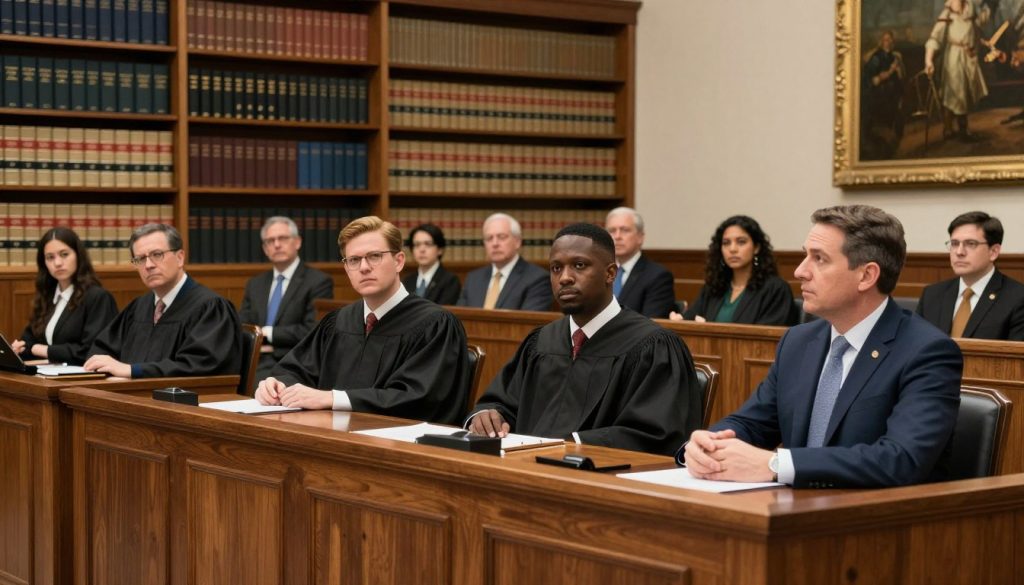
    A detailed courtroom scene focusing on the concept of qualified immunity, featuring a group of diverse judges (Caucasian, African American, Hispanic) seated at a large, polished wooden bench, wearing black judicial robes. In the foreground, a well-dressed attorney (in a navy suit) passionately presenting a case. The middle ground shows a packed courtroom with a mix of concerned onlookers and eager law students taking notes. In the background, tall, elegant bookshelves filled with legal texts and statutes loom, with soft, warm lighting creating an inviting atmosphere. A subtle historical painting relevant to justice hangs on the wall, evoking a sense of gravity and importance. The mood is serious and contemplative, capturing the weight of Supreme Court decisions. The camera angle is slightly low, giving prominence to the judges.

    Key Supreme Court Rulings That Shaped the Doctrine

    Several landmark Supreme Court cases have significantly influenced the doctrine of qualified immunity. Understanding these rulings is essential for a comprehensive grasp of the subject.

    • Harlow v. Fitzgerald: Established the modern doctrine of qualified immunity, emphasizing the importance of “clearly established” rights.
    • Pearson v. Callahan: Allowed courts to decide which prong of the qualified immunity test to address first, providing flexibility in the application of the doctrine.

    Conducting Your Own Legal Precedent Analysis

    To conduct a legal precedent analysis related to qualified immunity, one must carefully review relevant Supreme Court decisions and lower court rulings. This involves identifying patterns and inconsistencies in how courts apply the doctrine.

    By understanding the intricacies of the two-pronged test and significant Supreme Court rulings, individuals can better navigate the complex landscape of qualified immunity.

    Examining the Impact on Police Misconduct Lawsuits and Civil Rights Violations

    The impact of qualified immunity on cases related to police misconduct and civil rights violations is multifaceted and warrants a closer look. As the legal landscape continues to evolve, understanding the nuances of how qualified immunity affects these cases is crucial.

    How Qualified Immunity Blocks Excessive Force Cases

    Qualified immunity often shields law enforcement officers from liability in cases alleging excessive force, making it challenging for victims to seek justice. Courts apply a two-pronged test to determine whether an officer is entitled to qualified immunity, which can be a significant hurdle for plaintiffs.

    “The Supreme Court has emphasized that ‘clearly established law’ is a high bar, and it’s not enough for a plaintiff to show that their rights were violated; they must also show that the officer’s actions were objectively unreasonable in light of clearly established law at the time of the incident,” as noted in a relevant court decision.

    The Barriers Victims Face When Seeking Accountability

    Victims of police misconduct face significant barriers when seeking accountability due to qualified immunity. The doctrine can make it difficult for plaintiffs to overcome the hurdle of showing that the officer’s actions were not only unconstitutional but also contrary to clearly established law.

    This can lead to a lack of accountability and a sense of injustice among victims and their families. As Justice Sonia Sotomayor once noted, “Qualified immunity has become a absolute shield for law enforcement officers.”

    Notable Cases Where Qualified Immunity Prevented Justice

    There have been several notable cases where qualified immunity has prevented justice for victims of police misconduct. For instance, in cases involving excessive force, courts have often ruled in favor of the officers, citing qualified immunity.

    • A case in which an individual was subjected to excessive force during an arrest, and the court ruled that the officers were entitled to qualified immunity.
    • Another case where a person was fatally shot by police, and the court again applied qualified immunity, shielding the officers from liability.

    The Broader Effect on Civil Rights Protections

    The application of qualified immunity in police misconduct cases has broader implications for civil rights protections. By making it more difficult for individuals to seek redress for violations of their rights, qualified immunity can erode trust in the justice system and undermine the protections afforded by civil rights laws.

    “The doctrine of qualified immunity has been criticized for its potential to insulate government officials from accountability for their actions, thereby undermining the very purpose of § 1983.”

    In conclusion, the impact of qualified immunity on police misconduct lawsuits and civil rights violations is significant. It is essential to continue examining and debating the doctrine to ensure that justice is served and civil rights are protected.

    Evaluating Police Accountability Reform and Qualified Immunity Reform Proposals

    Reforming qualified immunity is a critical step towards enhancing police accountability. The ongoing debates and discussions around this legal doctrine have significant implications for how law enforcement agencies operate and how civil rights are protected.

    The call for reform is driven by the need to ensure that law enforcement officers are held accountable for their actions, particularly in cases involving alleged misconduct or civil rights violations. Various stakeholders, including lawmakers, civil rights organizations, and community leaders, are exploring different approaches to reform or potentially eliminate qualified immunity.

    Congressional Efforts to Reform or Eliminate Qualified Immunity

    Congress has been a key arena for debates on qualified immunity reform. Several bills have been proposed to either reform or completely eliminate the doctrine. For instance, the George Floyd Justice in Policing Act is one such legislative effort aimed at addressing police misconduct and reforming qualified immunity.

    These efforts reflect a broader recognition of the need to balance the protection of law enforcement officers with the need to hold them accountable for misconduct. The proposed reforms vary in their approach, with some focusing on adjusting the standards for qualified immunity and others advocating for its complete abolition.

    State-Level Actions and Alternative Approaches

    In addition to federal efforts, various states have taken their own initiatives to address qualified immunity. Some states have enacted laws that limit or eliminate qualified immunity for law enforcement officers. For example, Colorado passed a law in 2020 that allows police officers to be sued for damages in state court for violating an individual’s civil rights, effectively limiting the application of qualified immunity.

    Other states are exploring alternative accountability mechanisms, such as civilian review boards and independent review processes, to enhance transparency and accountability within law enforcement agencies.

    How Other Accountability Mechanisms Could Work

    Beyond reforming qualified immunity, other mechanisms can enhance police accountability. One approach is the use of body-worn cameras by police officers, which can provide critical evidence in cases of alleged misconduct.

    Another mechanism is the implementation of de-escalation training for law enforcement officers. This training aims to equip officers with the skills necessary to resolve situations without resorting to force, thereby reducing the likelihood of civil rights violations.

    What Reformed Police Accountability Might Look Like

    A reformed system of police accountability could involve a combination of legislative reforms, policy changes within law enforcement agencies, and community-led initiatives. The goal is to create a system that is transparent, accountable, and just.

    Reform Element Description Potential Impact
    Legislative Reforms Changes to laws governing qualified immunity and police conduct Enhanced accountability for law enforcement officers
    Policy Changes Updates to law enforcement agency policies on use of force and de-escalation Reduced instances of police misconduct
    Community Initiatives Community-led programs for police oversight and engagement Improved trust between law enforcement and the community

    Ultimately, the path forward will require a collaborative effort from lawmakers, law enforcement agencies, and the communities they serve. By exploring a range of reform proposals and accountability mechanisms, it is possible to create a more just and equitable system for all.

    Conclusion

    The ongoing qualified immunity legal debates highlight the complexities and challenges in balancing individual rights with the need to protect public officials from frivolous lawsuits. As discussed, qualified immunity is a doctrine that has evolved significantly over time, influencing how courts handle cases involving alleged civil rights violations by government officials.

    Understanding the nuances of qualified immunity is crucial for grasping its implications on police misconduct lawsuits and broader civil rights protections. The doctrine’s application has been a point of contention, with some arguing it shields officials from accountability, while others see it as a necessary protection against unwarranted legal actions.

    Reform efforts, both at the congressional and state levels, aim to address concerns around qualified immunity. Alternative approaches to police accountability are being explored, underscoring the need for a balanced approach that protects both individual rights and the interests of public servants. As the qualified immunity legal debates continue, it is essential to stay informed about the evolving landscape of civil rights law and its impact on society.

    FAQ

    What exactly is qualified immunity and why is it so controversial?

    Qualified immunity is a legal doctrine created by the Supreme Code that protects government officials, such as police officers, from being held personally liable for civil rights violations. The controversy stems from the fact that it often shields officials even when they violate the law, unless a plaintiff can prove the right was “clearly established.” This has sparked intense qualified immunity legal debates regarding whether the doctrine prioritizes government protection over individual justice.

    How do Supreme Court rulings influence the success of police misconduct lawsuits?

    Supreme Court rulings like *Pearson v. Callahan* have given lower courts the discretion to dismiss cases without even deciding if a constitutional violation occurred. Instead, courts often focus solely on whether a prior legal precedent analysis exists with nearly identical facts. This creates a “catch-22” where victims in police misconduct lawsuits cannot win because no previous case matches their specific situation, preventing new precedents from ever being set.

    What is the “clearly established” test used in excessive force cases?

    In excessive force cases, courts apply a two-pronged test. First, they ask if the officer’s conduct violated a constitutional right. Second, they ask if that right was “clearly established” at the time. Organizations like the ACLU point out that this requires a plaintiff to find a pre-existing case in the same jurisdiction with almost identical circumstances, which is an incredibly high bar for victims seeking accountability for civil rights violations.

    What are the primary arguments in the constitutional law debates surrounding this doctrine?

    The constitutional law debates are split between protection and accountability. Supporters, including the Fraternal Order of Police, argue that qualified immunity is necessary so that officers can make split-second decisions without the constant fear of personal financial ruin. Critics, such as the Cato Institute, argue that the doctrine has no basis in the text of the Civil Rights Act of 1871 and that it undermines the Constitution by denying victims a remedy for proven harms.

    Are there any active qualified immunity reform proposals at the federal level?

    Yes, one of the most prominent qualified immunity reform proposals is the George Floyd Justice in Policing Act. This federal bill aims to increase police accountability reform by specifically limiting or eliminating the qualified immunity defense for law enforcement officers, making it easier for citizens to pursue justice in federal court for misconduct.

    Have any states taken independent action to address police accountability reform?

    Absolutely! Several states have moved forward with their own police accountability reform measures to bypass federal limitations. For example, Colorado passed the Enhance Law Enforcement Integrity Act, and New Mexico enacted the Civil Rights Act, both of which allow individuals to sue for civil rights violations in state court where the defense of qualified immunity is not permitted.

    How can a legal precedent analysis impact the outcome of a civil rights case?

    A legal precedent analysis is the backbone of any qualified immunity defense. If a lawyer can show that the Supreme Court or a local appellate court hasn’t already ruled on a nearly identical scenario, the case is likely to be dismissed. This is why legal experts and journalists closely watch cases like *Taylor v. Riojas*, where the court occasionally signals a slight shift in how strictly the “clearly established” rule should be applied.
  • How to File a Civil Rights Lawsuit Against Law Enforcement

    How to File a Civil Rights Lawsuit Against Law Enforcement

    Did you know that Americans file thousands of police misconduct reports annually, yet only a small fraction ever reach a courtroom? It feels truly overwhelming when officials violate your personal space or safety. You might feel alone, but understanding your path to justice is the first step toward healing.

    Navigating the justice system requires patience and a solid plan to hold people accountable for their actions. This guide walks you through the necessary steps in a friendly way. We want to help you feel safe and heard while you seek a fair resolution for any mistreatment.

    Starting this journey involves gathering strong evidence and knowing your protections. You deserve to stand up for yourself when someone oversteps their authority. Let’s explore how you can move forward with confidence and clarity during this difficult time.

    Key Takeaways

    • Identify specific constitutional violations that occurred during the event.
    • Gather all physical evidence and witness contact information immediately.
    • Observe strict deadlines for submitting your legal claims.
    • Consult an experienced attorney to evaluate the strength of your case.
    • Document every single detail while the memory remains fresh.
    • Decide between state or federal court options for your situation.

    Understanding Your Civil Rights and When They’ve Been Violated

    Knowing your rights is the first step in identifying and addressing police misconduct. Civil rights are fundamental protections granted to individuals, and understanding these rights is crucial in recognizing when they have been violated.

    The Fourth Amendment protects citizens from unreasonable searches and seizures, while the Eighth Amendment prohibits excessive force. When law enforcement officers violate these rights, it’s considered police misconduct, which can lead to civil rights violations by police officers.

    Types of Police Misconduct That Constitute Civil Rights Violations

    Police misconduct can take many forms, each violating the civil rights of individuals in different ways.

    Excessive Force and Police Brutality

    Excessive force occurs when law enforcement officers use more force than necessary to subdue or apprehend an individual. This can lead to serious injury or even death. Police brutality is a form of excessive force that involves severe physical abuse.

    For instance, the use of chokeholds or other restraint techniques that can cause asphyxiation is considered a form of police brutality. Such actions are not only morally reprehensible but also legally actionable under civil rights laws.

    Unlawful Arrest and False Imprisonment

    Unlawful arrest and false imprisonment occur when an individual is detained without probable cause or legal justification. This can include arrests made without a warrant or based on false evidence.

    False imprisonment can also involve holding someone in custody for longer than necessary or denying them their right to due process.

    Illegal Search and Seizure

    The Fourth Amendment protects individuals from unreasonable searches and seizures. Law enforcement must have a warrant or probable cause to conduct a search. Searches conducted without proper authorization or justification are considered illegal.

    For example, a search conducted based on racial profiling or without a valid warrant can be considered a violation of an individual’s civil rights.

    Federal Laws That Protect You: Section 1983 and Beyond

    Federal laws provide critical protections against police misconduct. Section 1983 of the Civil Rights Act of 1871 allows individuals to sue law enforcement officers and other government officials for violating their civil rights.

    “Every person who, under color of any statute, ordinance, regulation, custom, or usage, of any State or Territory or the District of Columbia, subjects, or causes to be subjected, any citizen of the United States or other person within the jurisdiction thereof to the deprivation of any rights, privileges, or immunities secured by the Constitution and laws, shall be liable to the party injured in an action at law, suit in equity, or other proper proceeding for redress.”

    Section 1983 of the Civil Rights Act of 1871

    This law is a powerful tool for holding law enforcement accountable for their actions.

    State Laws and Additional Protections Against Law Enforcement Misconduct

    In addition to federal laws, many states have enacted their own laws to protect citizens from police misconduct. These laws can provide additional avenues for seeking justice.

    State Law Description
    California California Penal Code Section 835a Regulates the use of force by law enforcement
    New York New York State Executive Law Section 75 Prohibits excessive use of force by police
    Texas Texas Penal Code Section 9.51 Justifies the use of force by law enforcement under certain circumstances

    Preparing Your Civil Rights Lawsuits Against Law Enforcement

    The foundation of a successful civil rights lawsuit lies in the steps you take immediately after the incident occurs. When law enforcement officers violate your rights, it’s essential to act quickly and methodically to gather evidence and document the incident thoroughly.

    Documenting the Incident Immediately After It Occurs

    Immediate documentation is critical in excessive force litigation cases. This involves several key steps to ensure that you have a solid foundation for your claim.

    Taking Photos and Videos of Injuries

    Visual evidence is powerful in law enforcement accountability cases. Take clear, well-lit photos and videos of your injuries from multiple angles. This visual documentation can help demonstrate the extent of your injuries and support your claim.

    In a well-lit office setting, a diligent legal professional documents injuries sustained by an individual, who is seated across the table. The individual, dressed in modest casual clothing, displays visible bruises and scrapes on their arms, while the legal professional, in a sharp suit, meticulously records details in a notepad. The background contains law books and a computer, emphasizing a professional atmosphere. Natural light filters through the window, casting a warm glow on the scene. The camera angle is slightly elevated, capturing the intensity and seriousness of the moment, highlighting the importance of accountability in law enforcement. The mood is somber yet hopeful, reflecting the essence of justice and advocacy.

    As soon as possible after the incident, write down everything you remember. Include details about the events leading up to the incident, the incident itself, and any interactions with law enforcement officers afterward. This written account will be invaluable as your case progresses.

    Gathering Critical Evidence for Your Case

    In addition to documenting your injuries and experiences, gathering other forms of evidence is crucial. This can include witness statements, police reports, and any available video footage.

    Obtaining Witness Contact Information and Statements

    Witnesses can provide critical corroboration for your account. If there were witnesses to the incident, try to obtain their contact information and a statement from them as soon as possible.

    Requesting Police Reports and Incident Records

    Official records of the incident can provide valuable evidence. Request copies of police reports and any other incident records related to your case.

    Securing Body Camera and Dashcam Footage

    Video footage from body cameras and dashcams can offer objective evidence of what occurred. If such footage exists, take steps to secure it for your case.

    Getting Medical Treatment and Documentation

    Seeking medical attention not only ensures your health and well-being but also provides a medical record of your injuries. This documentation is essential for supporting your claim in excessive force litigation.

    Understanding Time Limits: Statute of Limitations for Police Misconduct Legal Actions

    There are time limits for filing a civil rights lawsuit, known as the statute of limitations. Understanding these time limits is crucial to ensuring that your case can move forward. The specific statute of limitations can vary, so it’s essential to consult with an attorney to understand the time frame applicable to your case.

    Step-by-Step Process for Filing Your Lawsuit

    Understanding the step-by-step process for filing a civil rights lawsuit is crucial for victims of police brutality. This process involves several key steps that help ensure your case is presented effectively.

    Step 1: Find and Consult with an Experienced Civil Rights Attorney

    The first step in filing a lawsuit is to consult with an attorney who specializes in civil rights cases, particularly those involving police brutality legal claims. This expertise is vital because these lawyers understand the complexities of unlawful police actions lawsuits.

    What to Look for in a Lawyer

    When searching for a lawyer, consider their experience with cases similar to yours. Look for:

    • A track record of successful outcomes in civil rights cases
    • Familiarity with local laws and court systems
    • A strong understanding of both state and federal laws regarding police misconduct

    Questions to Ask During Your Consultation

    During your initial consultation, ask questions like:

    • What experience do you have with police brutality legal claims?
    • How will you approach my case?
    • What are the potential challenges we might face?

    Step 2: File an Administrative Claim or Notice

    Before proceeding to court, you may need to file an administrative claim or notice. This step is crucial for preserving your right to sue.

    Understanding When Administrative Filing Is Required

    Administrative filing is often required when the defendant is a government entity or employee. This step involves submitting a claim to the relevant government agency.

    Meeting Deadlines for Government Claims

    It’s critical to meet the deadlines for filing government claims, as missing these deadlines can bar your lawsuit. Typically, you have between 6 months to 2 years to file, depending on the jurisdiction.

    Step 3: Draft and File Your Federal Civil Rights Complaint

    Drafting and filing your complaint is a critical step in the lawsuit process. Your complaint must clearly state the facts of your case and the legal grounds for your claim.

    Choosing the Correct Court and Jurisdiction

    Your lawyer will help determine whether your case should be filed in state or federal court. Cases involving federal laws, such as Section 1983 claims, are typically filed in federal court.

    Identifying All Defendants in Your Lawsuit

    It’s essential to identify all potential defendants in your lawsuit, including individual officers, supervisors, and government entities.

    Step 4: Serve Legal Papers to Law Enforcement Defendants

    After filing your complaint, you must serve the defendants with legal papers. This step formally notifies them of the lawsuit.

    Step 5: Participate in the Discovery Phase

    The discovery phase involves exchanging information and evidence with the defendants. This is a critical phase where both sides gather evidence to support their claims.

    Responding to Interrogatories and Document Requests

    You will be required to respond to interrogatories (written questions) and document requests from the defendants. Your lawyer will help prepare your responses.

    Preparing for Your Deposition

    A deposition is a sworn testimony where you will be questioned by the defendants’ lawyers. Your attorney will prepare you for this process.

    What to Expect During Law Enforcement Accountability Cases

    Understanding what to expect during law enforcement accountability cases is vital for individuals considering a lawsuit. These cases involve complex legal processes and nuances that can significantly impact the outcome.

    Navigating Qualified Immunity and Common Legal Defenses

    Law enforcement officers often rely on qualified immunity to defend against misconduct allegations. This legal doctrine shields officers from liability unless their actions clearly violate established constitutional rights.

    How Officers Use Qualified Immunity to Dismiss Cases

    Officers may use qualified immunity to argue that their actions were reasonable based on the information available at the time. To overcome this defense, plaintiffs must demonstrate that the officer’s actions were objectively unreasonable.

    Overcoming Defense Strategies in Excessive Force Litigation

    To succeed in excessive force litigation, plaintiffs must present strong evidence that counters the officer’s version of events. This may involve:

    • Video footage that contradicts the officer’s account
    • Witness testimony that supports the plaintiff’s claim
    • Expert analysis that challenges the officer’s use of force

    The Settlement Negotiation Process in Use of Force Lawsuits

    Settlement negotiations are a critical aspect of use of force lawsuits. These negotiations can occur at various stages of the litigation process.

    When Settlements Typically Occur

    Settlements may occur before trial, often after the discovery phase has provided a clearer understanding of the case’s strengths and weaknesses. Early settlements can reduce legal costs and emotional stress.

    Evaluating Settlement Offers

    When evaluating settlement offers, plaintiffs should consider factors such as:

    1. The amount offered in relation to the damages incurred
    2. The likelihood of success at trial
    3. The potential costs and risks associated with continuing litigation

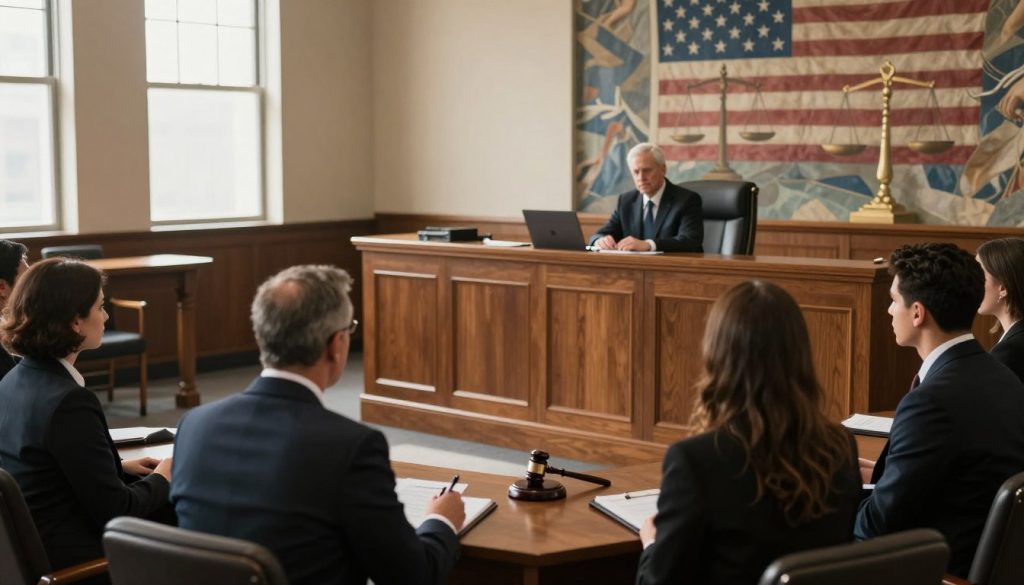
    A somber courtroom scene capturing the essence of law enforcement accountability. In the foreground, a diverse group of individuals in professional business attire, looking resolute as they consult with an attorney. In the middle, a large wooden judge's bench stands imposing, with a gavel resting on it, symbolizing justice. The background features a mural depicting the scales of justice and the American flag, emphasizing the legal context. Soft, natural lighting filters through tall windows, casting a warm glow on the scene, creating an atmosphere of hope amidst seriousness. The angle is slightly elevated, allowing a comprehensive view of the courtroom dynamics, evoking the weight of civil rights lawsuits against law enforcement.

    Preparing for Trial in Police Brutality Legal Claims

    If a settlement is not reached, the case will proceed to trial. Preparation is key to presenting a strong case.

    Types of Compensation Available in Misconduct by Law Enforcement Lawsuits

    Successful plaintiffs in misconduct by law enforcement lawsuits may be entitled to various types of compensation.

    Economic Damages for Medical Bills and Lost Wages

    Economic damages cover tangible losses such as medical expenses and lost income. Accurate documentation is crucial for securing fair compensation.

    Non-Economic Damages for Pain and Suffering

    Non-economic damages address intangible harms like pain, suffering, and emotional distress. These damages are often more challenging to quantify.

    Punitive Damages in Egregious Cases

    In cases involving egregious misconduct, punitive damages may be awarded to punish the defendant and deter future misconduct.

    Conclusion

    Understanding your civil rights and the legal protections available is crucial in holding law enforcement accountable for their actions. If you’ve been a victim of police misconduct, it’s essential to know that you have the right to file civil rights lawsuits against law enforcement.

    The process involves several key steps, from documenting the incident and gathering evidence to consulting with an experienced civil rights attorney and navigating the legal system. By taking these steps, you can seek justice and compensation for the harm you’ve suffered.

    Filing a lawsuit against law enforcement is a significant decision, but it’s a vital part of ensuring accountability and promoting positive change within the justice system. If you’re considering taking action, don’t hesitate to reach out to legal professionals who can guide you through the process of civil rights lawsuits against law enforcement.

    FAQ

    How do I know if I have grounds for civil rights lawsuits against law enforcement?

    You generally have a case if you can demonstrate that your constitutional rights were violated. Common examples include excessive force litigation, unlawful arrest, or illegal search and seizure. If you have experienced civil rights violations by police officers, such as physical abuse or being detained without probable cause, it is essential to consult with a legal professional to evaluate the specific details of the incident.

    What is Section 1983 and how does it relate to law enforcement accountability cases?

    Section 1983 is a federal law that allows individuals to sue government high-ranking officials and police officers for civil rights violations. It is the primary tool used in law enforcement accountability cases to hold officers personally liable for actions taken “under color of law” that deprive a citizen of their rights, such as those protected by the Fourth and Fourteenth Amendments.

    What kind of evidence is most important in police misconduct legal actions?

    Strong evidence is the backbone of successful police misconduct legal actions. You should prioritize obtaining body camera and dashcam footage, as well as any bystander videos. Additionally, medical records documenting injuries, witness statements, and a detailed personal diary of the event are critical. The more objective documentation you have, the stronger your misconduct by law enforcement lawsuits will be.

    How long do I have to file a claim for police brutality legal claims?

    The timeline, known as the statute of limitations, varies by state but is often between one and three years for federal claims. However, if you are filing against a government entity, you may be required to submit an administrative notice of claim within a much shorter window—sometimes as little as 60 to 180 days after the incident. Missing these deadlines can permanently bar you from pursuing police brutality legal claims.

    Can an officer use “qualified immunity” to stop use of force lawsuits against law enforcement?

    Yes, qualified immunity is a common defense where officers claim they are protected from liability unless their conduct violated “clearly established” law. Overcoming this defense is one of the most challenging aspects of use of force lawsuits against law enforcement. An experienced attorney will work to show that any reasonable officer would have known the conduct was unconstitutional under existing legal precedents.

    What damages can I recover in unlawful police actions lawsuits?

    Victims of unlawful police actions lawsuits can seek several types of compensation. This includes economic damages for medical bills and lost wages, non-economic damages for emotional distress and physical pain, and in particularly egregious cases, punitive damages intended to punish the officer and deter future misconduct.

    Why is it necessary to find a specialist for excessive force litigation?

    Excessive force litigation is highly complex and involves navigating specific legal doctrines and government immunity. A specialist attorney understands how to navigate the discovery phase, handle depositions of police personnel, and counter the aggressive defense strategies often used by municipalities. Having an expert ensures your voice is heard throughout the entire civil rights lawsuits against law enforcement process.
  • Legal Use of Force: Navigating the Standards

    Legal Use of Force: Navigating the Standards

    Did you know that American officers engage in nearly sixty million public meetings annually? Actually, physical contact occurs in less than two percent among those stops. This figure shows why use of force legal standards remain a vital topic for our society today.

    Navigating these specific regulations involves looking at safety and basic rights. We aim to explain how these rules keep communities safe while protecting your rights. Our guide makes these important concepts simple to understand for everyone.

    We will examine how the Supreme Court defines what is reasonable during high-pressure moments. This article provides a clear roadmap. It offers guidelines for law enforcement actions. Knowledge empowers us to join in meaningful talks regarding justice and public safety.

    Key Takeaways

    • Learn how basic rights impact policing.
    • Discover the reasonableness test for officers.
    • Explore how police make fast choices.
    • Study ways to keep scenes safe.
    • Check major court rulings.
    • Understand what people expect from police.

    Understanding the Legal Framework Governing Use of Force

    Navigating the legal landscape of use of force requires a deep understanding of constitutional protections and law enforcement policies. The legal framework governing the use of force is complex, involving various constitutional amendments, federal and state laws, and departmental policies.

    The Fourth Amendment and Constitutional Protections

    The Fourth Amendment to the U.S. Constitution is foundational in understanding the legal standards for the use of force. It protects citizens from unreasonable seizures, which include the use of excessive force by law enforcement officers.

    Unreasonable Seizure Standards

    The concept of “unreasonable seizure” is central to determining the legality of force used by law enforcement. Courts have grappled with defining what constitutes an unreasonable seizure, often considering the totality of the circumstances.

    Balancing Government Interest and Individual Rights

    A critical aspect of evaluating the use of force is balancing the government’s interest in maintaining public safety against the individual’s right to be free from excessive force. This balance is delicate and context-dependent.

    Graham v. Connor: Establishing Objective Reasonableness

    The landmark Supreme Court case Graham v. Connor (1989) established the standard of “objective reasonableness” for assessing the use of force. This standard emphasizes the importance of considering the circumstances from the perspective of a reasonable officer on the scene.

    The Three-Prong Test

    Graham v. Connor introduced a three-prong test to evaluate the reasonableness of the force used: the severity of the crime, whether the suspect poses an immediate threat, and whether the suspect is resisting or fleeing. This test provides a framework for assessing the legality of force.

    Split-Second Judgment Doctrine

    The “split-second judgment” doctrine acknowledges that law enforcement officers often have to make rapid decisions in tense situations. This doctrine is crucial in evaluating the reasonableness of the force used under the pressure of the moment.

    Federal, State, and Local Law Enforcement Policies

    In addition to constitutional standards, law enforcement agencies are guided by federal, state, and local policies regarding the use of force. These policies can vary significantly and provide additional layers of guidance for officers.

    Model Use of Force Guidelines

    Various model policies and guidelines have been developed to assist law enforcement agencies in crafting their use of force policies. These models often emphasize de-escalation techniques and proportionality.

    Jurisdictional Variations in Standards

    It’s essential to recognize that the standards for the use of force can vary by jurisdiction. Understanding these variations is crucial for law enforcement officers operating in different areas.

    Decoding the Force Continuum and Reasonable Force Definition

    A force continuum is a critical tool for law enforcement, providing a framework for escalating or de-escalating force based on the situation. It helps officers assess the level of threat they face and respond appropriately.

    The Traditional Force Continuum Model

    The traditional force continuum model is a graduated scale that outlines the levels of force an officer can use in response to a subject’s behavior. It typically starts with the presence of the officer and escalates to more severe measures as necessary.

    Officer Presence as the First Level

    The first level of the force continuum is the presence of the officer. The mere presence of a law enforcement officer can often be enough to de-escalate a situation.

    Verbal Commands and Communication

    Verbal commands are the next level, where officers use clear and firm communication to instruct individuals. Effective communication can prevent the need for physical force.

    Empty Hand Control Techniques

    If verbal commands are not effective, officers may use empty hand control techniques, such as grabbing or holding, to gain compliance.

    Intermediate Force Options

    When empty hand control is insufficient, officers may need to employ intermediate force options.

    Less-Lethal Weapons and Their Application

    Less-lethal weapons, such as batons or less-lethal munitions, are designed to minimize the risk of serious injury. These tools give officers additional options between empty hand control and deadly force.

    Chemical Sprays and Electronic Control Devices

    Chemical sprays and electronic control devices (ECDs) are also considered intermediate force options. They can incapacitate individuals without causing permanent harm.

    Deadly Force Regulations and Legal Justification

    The use of deadly force is strictly regulated and only justified in certain circumstances.

    Tennessee v. Garner Standard

    The Tennessee v. Garner standard established that deadly force is only justified if the suspect poses a significant threat of death or serious physical injury to the officer or others.

    Imminent Threat of Death or Serious Bodily Harm

    An imminent threat is a critical factor in determining whether the use of deadly force is legally justified. Officers must assess the situation carefully to determine if such a threat exists.

    Level of Force Description Example
    Officer Presence The presence of the officer Uniformed officer arriving at the scene
    Verbal Commands Clear and firm communication Officer instructing a suspect to stop
    Empty Hand Control Physical control without weapons Grabbing or holding a suspect
    Intermediate Force Use of less-lethal tools Baton, chemical sprays, or ECDs
    Deadly Force Force likely to cause death or serious injury Firearm discharge

    How to Apply Use of Force Legal Standards Step-by-Step

    The justifiable use of force is contingent upon a careful, step-by-step assessment of the situation. Law enforcement officers must be well-versed in the legal standards governing their actions to ensure that their decisions are justified and compliant with the law.

    Step 1: Conduct a Rapid Threat Assessment

    When encountering a potentially volatile situation, officers must quickly assess the level of threat posed. This involves identifying immediate dangers and evaluating the subject’s capabilities and intentions.

    Identifying Immediate Dangers

    Officers should be vigilant for signs of imminent threat, such as visible weapons or aggressive behavior. Recognizing these cues early is crucial for de-escalation or appropriate response.

    Evaluating Weapons and Environmental Factors

    The presence of weapons and environmental factors, such as the terrain or nearby bystanders, can significantly impact the threat assessment. Officers must consider these elements when determining the level of force necessary.

    A thoughtful legal professional standing in an elegant office, reviewing a large document titled "Use of Force Legal Standards," displayed prominently on a polished wooden desk. In the foreground, the lawyer, dressed in a tailored navy suit and glasses, actively takes notes and looks contemplative. The middle ground features shelves filled with law books and a framed certificate, emphasizing professionalism and expertise. The background includes large windows that allow natural light to flood the room, casting soft shadows and creating a warm, serious atmosphere. The composition should convey a sense of diligence and complexity, focused on the step-by-step evaluation of legal principles. The lighting is bright yet soft, suggesting an inviting environment for deep thought and analysis.

    Step 2: Determine Subject Resistance Level

    Understanding the level of resistance offered by a subject is critical in determining the appropriate response. Officers must differentiate between passive resistance and active aggression.

    Passive Resistance versus Active Aggression

    Passive resistance involves non-compliance without physical aggression, whereas active aggression poses a direct threat to the officer or others. The distinction between these two forms of resistance is vital for selecting the appropriate level of force.

    Assessing Physical Capabilities and Intentions

    Officers should assess the subject’s physical capabilities and apparent intentions to determine the likelihood of escalation. This assessment informs the decision on the level of force required.

    Step 3: Apply the Totality of Circumstances Analysis

    The totality of circumstances analysis involves considering all relevant factors in the situation to determine the reasonableness of the force used.

    Severity of the Crime at Issue

    The severity of the crime the subject is suspected of committing is a significant factor. More severe crimes may justify a higher level of force.

    Whether the Subject Poses an Immediate Threat

    If the subject poses an immediate threat to the officer or others, this significantly influences the decision on the use of force.

    Active Resistance or Attempt to Evade Arrest

    Whether the subject is actively resisting arrest or attempting to flee also impacts the level of force that is justified.

    Factor Consideration Impact on Force Decision
    Severity of Crime More severe crimes May justify higher force
    Immediate Threat Presence of threat Significantly influences force decision
    Active Resistance Level of resistance Affects proportionality of response

    Step 4: Select and Deploy Proportional Force

    Once the threat assessment and subject resistance level are determined, officers must select a proportional response.

    Matching Response to Threat Level

    The level of force used should be commensurate with the threat posed. Proportionality is key to ensuring that the use of force is justifiable.

    Continuous Reassessment During the Encounter

    Officers must continuously reassess the situation and adjust their response as necessary. Circumstances can change rapidly, and the level of force must be adjusted accordingly.

    Step 5: Document Your Decision-Making Process

    Thorough documentation of the decision-making process is essential for justifying the use of force.

    Articulating Reasonableness in Reports

    Officers should clearly articulate the reasonableness of their actions in their reports, detailing the factors that influenced their decisions.

    Capturing Critical Facts and Observations

    All critical facts and observations should be documented, providing a comprehensive account of the incident.

    Recognizing Excessive Force Laws and Ensuring Justifiable Use of Force

    Understanding excessive force laws is crucial for law enforcement to maintain public trust and ensure justifiable use of force. The application of force by law enforcement officers is a critical aspect of their duty, and it must be carried out within the bounds of the law.

    Identifying Excessive Force Violations

    Excessive force violations occur when law enforcement officers use more force than is necessary to resolve a situation. This can lead to serious consequences, both legally and in terms of community relations.

    Force Applied After Threat Has Ended

    One clear indicator of excessive force is the application of force after the threat has ceased. Once a subject is under control or no longer poses a threat, further use of force is generally considered excessive.

    Disproportionate Response to Resistance

    A disproportionate response to a subject’s resistance is another form of excessive force. Law enforcement officers must assess the level of resistance and respond with a proportional level of force.

    Failure to De-escalate When Possible

    Failure to de-escalate a situation when possible can also be considered excessive force. De-escalation techniques are critical in resolving situations without the need for physical force.

    A striking courtroom scene capturing the essence of excessive force laws. In the foreground, a diverse group of legal professionals, dressed in professional business attire, engage in earnest discussion around a large wooden table. Their expressions reflect the seriousness of the subject. In the middle ground, a large scale model of a police badge juxtaposed with a set of handcuffs symbolizes the duality of authority and accountability. Soft, dramatic lighting filters through tall windows, casting a warm glow that emphasizes the tension and gravitas in the room. The background features a grand bookshelf filled with legal texts and case law volumes, creating a scholarly atmosphere. The overall mood is one of solemnity and reflection, focused on justice and ethical considerations in law enforcement practices.

    Implementing De-escalation Strategies

    De-escalation is a key component in reducing the need for force. Effective de-escalation can prevent situations from escalating into more serious confrontations.

    Tactical Communication and Time

    Tactical communication involves using specific communication techniques to calm a situation. Giving officers time to assess the situation and use communication to de-escalate can significantly reduce the need for force.

    Creating Distance and Using Cover

    Creating distance between the officer and the subject can provide time to assess the situation and decide on the best course of action. Using cover can also protect the officer and provide a safer environment for de-escalation.

    Meeting Documentation and Accountability Requirements

    Proper documentation and accountability are essential in ensuring that the use of force is justifiable. Law enforcement agencies must have robust policies in place for reporting and reviewing use of force incidents.

    Mandatory Reporting Procedures

    Mandatory reporting procedures ensure that all use of force incidents are documented and reviewed. This helps to identify any potential issues and ensures that officers are held accountable for their actions.

    Supervisor Review and Investigation Protocols

    Supervisor review and investigation protocols are critical in ensuring that use of force incidents are thoroughly examined. This helps to determine whether the use of force was justifiable and in line with department policies.

    Conclusion

    Law enforcement officers must understand the legal framework governing police use of force to ensure they apply reasonable force definition in various situations. By grasping the principles outlined in the Fourth Amendment and landmark cases like Graham v. Connor, officers can make informed decisions.

    A critical aspect of police use of force is the ability to assess situations rapidly and respond with proportional force. This involves understanding the force continuum and being aware of the totality of circumstances.

    To maintain public trust and uphold their duty to protect, law enforcement agencies must prioritize training on the reasonable force definition and de-escalation techniques. Thorough documentation of incidents involving police use of force is also crucial for accountability.

    By staying informed and committed to best practices, law enforcement officers can navigate complex situations effectively, minimizing the risk of excessive force and ensuring a safer community for all.

    FAQ

    What is the primary legal standard used to evaluate police use of force?

    The cornerstone of use of force legal standards is the principle of objective reasonableness. Established by the Supreme Court in the landmark case Graham v. Connor, this standard requires that an officer’s actions be evaluated from the perspective of a reasonable officer on the scene. It acknowledges that law enforcement must often make split-second judgments in tense, uncertain, and rapidly evolving situations without the benefit of 20/20 hindsight.

    How does the Fourth Amendment protect citizens during an encounter?

    The Fourth Amendment protects individuals against unreasonable seizures. In a legal context, a “seizure” occurs when a government official, like a member of the Federal Bureau of Investigation (FBI), uses physical force or a show of authority to restrain a person’s liberty. To be constitutional, the police use of force must be reasonable, balancing the nature of the intrusion on the individual’s rights against the importance of the governmental interests at stake.

    What is a force continuum and how is it used?

    A force continuum is a standard tool found in many use of force guidelines. It acts as a visual ladder to help officers determine the appropriate level of response based on a subject’s resistance. It typically starts with officer presence and verbal commands, escalating to empty-hand control, then to intermediate tools like TASER devices or pepper spray, and finally to deadly force if the situation warrants it.

    When are deadly force regulations legally met?

    Under the Tennessee v. Garner standard, deadly force regulations are strictly applied. An officer is generally only justified in using deadly force if they have probable cause to believe the suspect poses an imminent threat of death or serious physical harm to the officer or others. This is a critical component of ensuring a justifiable use of force in life-threatening scenarios.

    What is the reasonable force definition in everyday policing?

    The reasonable force definition refers to the minimum amount of pressure or physical intervention necessary to achieve a legitimate law enforcement objective, such as protecting the public or making a lawful arrest. Agencies like the International Association of Chiefs of Police (IACP) emphasize that force should be proportional to the threat faced and must be continuously reassessed as the situation changes.

    How do excessive force laws hold officers accountable?

    A: Excessive force laws are designed to penalize actions that go beyond what is “objectively reasonable.” If an officer continues to use force after a subject has been restrained or is no longer a threat, it is a violation of civil rights. Proper law enforcement policies require detailed documentation and supervisor reviews to ensure transparency and accountability for every use-of-force incident.

    Why is de-escalation so important in modern law enforcement policies?

    Modern law enforcement policies, such as those implemented by the New York City Police Department (NYPD), prioritize de-escalation strategies to reduce the need for physical force. By using tactical communication, creating distance, and slowing down an encounter, officers can often resolve a situation peacefully. This approach not only protects the public but also ensures that when force is used, it remains within the boundaries of justifiable use of force.
  • Police Misconduct Investigations: Uncovering the Truth

    Police Misconduct Investigations: Uncovering the Truth

    Did you know that major U.S. cities often pay out over $300 million every year for civil rights claims? This massive figure highlights why law enforcement accountability is more vital today than ever before. Learning how these internal reviews work helps build trust between officials and the neighbors they serve.

    Finding the path to justice can feel hard for many people in our communities. This guide makes the process of seeking transparency simple and shows what to expect in a formal inquiry. We believe that clear facts help everyone follow high rules of professional behavior.

    When we talk about these oversight steps, we are looking at the heart of public safety. Trust grows through honest work and a promise to do what is right. Let us see how these systems protect your rights and keep our towns safe for everyone.

    Key Takeaways

    • Transparency builds stronger bonds within local neighborhoods.
    • Oversight ensures that staff follow strict ethical rules.
    • Public records are key for conducting honest reviews.
    • Large legal payouts significantly impact city budgets.
    • Formal claims give citizens a way to be heard.
    • High standards of behavior protect the rights of all people.

    Understanding What Constitutes Police Misconduct

    Recognizing police misconduct requires a comprehensive understanding of the different types of behavior that violate professional standards in policing. Police misconduct cases can involve a wide range of actions, from excessive use of force to discriminatory practices.

    Types of Misconduct Behavior

    Misconduct behavior can manifest in various forms, including:

    • Excessive use of force
    • False arrest or detention
    • Discriminatory practices
    • Verbal abuse or harassment
    • Corruption or bribery

    These behaviors not only violate the trust between law enforcement and the community but also undermine the integrity of the justice system. As noted by the International Association of Chiefs of Police, “Maintaining public trust is essential to effective policing.”

    Type of Misconduct Description Example
    Excessive Force Using more force than necessary to subdue or apprehend an individual. A police officer using physical force against a compliant suspect.
    False Arrest Detaining someone without probable cause or legal justification. Arresting someone for a crime they did not commit.
    Discriminatory Practices Treating individuals differently based on race, gender, or other protected characteristics. Profiling individuals based on their ethnicity.

    Distinguishing Between Policy Violations and Criminal Acts

    It’s crucial to differentiate between policy violations and criminal acts. While all criminal acts are serious, not all policy violations rise to the level of criminal behavior. Understanding this distinction is vital for appropriate action.

    As stated by the National Institute of Justice, “The line between policy violations and criminal acts can sometimes be blurry, but it’s essential for investigations to clearly distinguish between the two.”

    Your Constitutional Rights During Police Encounters

    Knowing your constitutional rights during police encounters is fundamental. The Fourth Amendment protects against unreasonable searches and seizures, and the Fifth Amendment safeguards against self-incrimination.

    “The right of the people to be secure in their persons, houses, papers, and effects, against unreasonable searches and seizures, shall not be violated.” – Fourth Amendment to the U.S. Constitution

    Understanding these rights can help individuals navigate interactions with law enforcement more effectively. If you believe your rights have been violated, documenting the incident and seeking legal counsel can be crucial steps.

    Recognizing and Documenting Misconduct When It Happens

    Understanding how to identify and document police misconduct is essential for ensuring accountability. When individuals know how to recognize the signs of misconduct and take appropriate action, they can significantly contribute to promoting transparency and justice.

    Identifying Warning Signs During Police Interactions

    During interactions with law enforcement, being aware of your surroundings and the behavior of the officers is crucial. Some warning signs of potential misconduct include:

    • Excessive use of force or aggressive language
    • Disregard for established protocols or procedures
    • Unprofessional behavior or discriminatory remarks

    Staying calm and observant during these interactions can help you identify any potential misconduct. If you witness or experience something that seems inappropriate, it’s vital to document it as thoroughly as possible.

    Safe Documentation Methods

    Documenting incidents involving potential police misconduct requires careful consideration to ensure safety and accuracy. Here are some methods to consider:

    Recording Video and Taking Photographs

    If it’s safe to do so, recording video or taking photographs can provide valuable evidence. Ensure that you’re not interfering with the police operation or putting yourself at risk. The use of smartphones has made it easier for individuals to capture high-quality video and photos that can be used in police abuse investigations.

    As soon as possible after the incident, write down everything you remember. Include details such as the date, time, location, and descriptions of the officers involved. This written record can be crucial for internal affairs investigations.

    Collecting Witness Contact Information

    If there were witnesses, try to obtain their contact information. Their testimonies can corroborate your account and strengthen any complaint you might file.

    Preserving Medical Records and Physical Evidence

    If you were injured during the incident, seek medical attention immediately. Preserving medical records is vital as they can serve as critical evidence. Additionally, if there is any physical evidence related to the incident, such as damaged clothing or objects, preserve them carefully as they may be used in investigations.

    By understanding how to recognize and document police misconduct, individuals can play a significant role in ensuring that police abuse investigations are thorough and that internal affairs investigations are effective in holding officers accountable.

    How to File a Police Misconduct Complaint Step-by-Step

    The process of filing a police misconduct complaint can seem daunting, but breaking it down into manageable steps can simplify the task. Understanding these steps is crucial for promoting police accountability measures and ensuring that complaints are handled properly.

    Step 1: Identify the Correct Agency to Contact

    The first step in filing a complaint is to identify the correct agency to contact. This could be the police department’s internal affairs division, a civilian review board, or a state or local oversight agency. It’s essential to direct your complaint to the appropriate body to ensure it’s processed correctly.

    Step 2: Gather and Organize Your Evidence

    Gathering and organizing evidence is a critical step in building a strong complaint. This can include witness statements, photographs, video footage, and any relevant documentation. Keeping your evidence organized will help in filling out the complaint form accurately.

    Step 3: Choose Your Filing Method

    There are several ways to file a police misconduct complaint. The method you choose may depend on the agency’s policies and your personal preference.

    Online Complaint Portals

    Many police departments now offer online portals for filing complaints. These portals can provide a convenient and straightforward way to submit your complaint.

    In-Person Filing at Police Stations

    Filing a complaint in person allows you to directly interact with the department’s representatives. Be prepared to provide detailed information and evidence.

    Mail or Written Submissions

    Some agencies accept complaints via mail. When using this method, ensure you keep a copy of your complaint and any supporting documents.

    Step 4: Complete the Complaint Form Thoroughly

    When filling out the complaint form, be as detailed as possible. Include dates, times, locations, and descriptions of the incident. Attaching your gathered evidence can strengthen your complaint.

    Step 5: Keep Records of Your Submission

    After submitting your complaint, make sure to keep a record of your submission. This can include a copy of the complaint form, any reference numbers provided, and subsequent correspondence with the agency.

    Filing Method Advantages Disadvantages
    Online Portal Convenient, straightforward Limited interaction, technical issues
    In-Person Direct interaction, immediate feedback Time-consuming, potentially intimidating
    Mail/Written Paper trail, flexibility Slow process, potential for loss

    Filing a police misconduct complaint is a vital step towards promoting police accountability measures and ensuring that law enforcement agencies are transparent and just. By following these steps, individuals can effectively navigate the complaint process and contribute to police corruption probes.

    How Police Misconduct Investigations Actually Work

    Delving into the specifics of police misconduct investigations reveals a structured process designed to address allegations thoroughly. This process is crucial for maintaining public trust and ensuring that any misconduct is identified and addressed appropriately.

    Investigation Timeline and What to Expect

    The timeline for police misconduct investigations can vary significantly depending on the complexity of the case and the jurisdiction. Generally, investigations can take anywhere from a few weeks to several months or even years to complete. It’s essential for complainants to understand that thoroughness is prioritized over speed.

    Key stages in the investigation timeline include:

    • Initial review of the complaint
    • Gathering and analysis of evidence
    • Interviews with witnesses and involved officers
    • Compilation of a detailed report

    Who Investigates Police Misconduct Cases

    Police misconduct cases can be investigated by various entities, including internal affairs divisions within the police department, civilian review boards, or external oversight agencies. The specific entity responsible often depends on the jurisdiction and the nature of the complaint.

    A detailed and professional scene depicting the police oversight procedures in an investigation room, focusing on a round table occupied by three individuals in professional attire. The foreground captures a diverse group of professionals, including a middle-aged Black woman reviewing documents, a South Asian man taking notes, and a Caucasian woman examining evidence on her laptop. In the middle ground, a corkboard displaying pinned complaints and a policy manual is visible, emphasizing the investigative process. The background features a glass window, allowing soft, natural light to illuminate the room, setting a serious yet hopeful atmosphere. The color palette should primarily use cool tones, with shadows adding depth to the scene, enhancing the gravity of the police misconduct investigations. The image must convey seriousness, professionalism, and collaboration without any text or markings.

    Your Responsibilities as a Complainant

    As a complainant, it’s crucial to cooperate fully with the investigation. This includes providing detailed and accurate information, preserving evidence, and being available for interviews. Understanding your role and responsibilities can significantly impact the effectiveness of the investigation.

    Some key responsibilities include:

    1. Providing a clear and detailed account of the incident
    2. Submitting any relevant evidence or documentation
    3. Being available for follow-up questions or interviews

    Confidentiality Protections and Limitations

    Confidentiality is a significant concern for complainants. While investigations are typically conducted with a degree of confidentiality, there are limitations to this confidentiality, especially in cases that proceed to public hearings or court proceedings.

    It’s essential to understand that while efforts are made to protect the identity of complainants, complete anonymity cannot always be guaranteed, particularly in high-profile cases or those that attract significant public attention.

    Internal Affairs Versus External Oversight Bodies

    When it comes to addressing police misconduct, the distinction between internal affairs divisions and external oversight bodies is crucial for ensuring accountability. Police departments across the United States employ a combination of internal and external mechanisms to investigate allegations of misconduct.

    The internal affairs division is typically responsible for investigating allegations of misconduct within a police department. These divisions are staffed by sworn officers who have the authority to investigate complaints and recommend disciplinary actions.

    How Internal Affairs Divisions Function

    Internal affairs divisions operate under the police department’s command structure, which can sometimes lead to concerns about bias or cover-ups. However, many departments have implemented measures to ensure the integrity of internal affairs investigations.

    Key Functions of Internal Affairs Divisions:

    • Investigating complaints against officers
    • Gathering evidence and interviewing witnesses
    • Recommending disciplinary actions

    As noted by the International Association of Chiefs of Police, “Internal affairs units play a critical role in maintaining the public’s trust in law enforcement agencies.”

    Civilian Review Boards and Their Authority

    Civilian review boards, on the other hand, are external oversight bodies composed of community members who review complaints against police officers. These boards can provide an independent perspective on police misconduct allegations.

    Authority of Civilian Review Boards:

    Authority Description
    Reviewing Complaints Civilian review boards examine complaints filed against police officers.
    Investigative Powers Some boards have the authority to conduct their own investigations.
    Recommendations Boards can recommend disciplinary actions to the police department.

    “Civilian review boards are essential for ensuring that police departments are transparent and accountable to the communities they serve.”

    State and Federal Oversight Mechanisms

    In addition to internal affairs divisions and civilian review boards, state and federal agencies can also play a role in overseeing police misconduct investigations.

    Examples of State and Federal Oversight:

    • State Attorney General’s Office
    • Federal Bureau of Investigation (FBI)
    • Department of Justice (DOJ)

    Understanding Jurisdiction and Authority Limits

    It’s essential to understand the jurisdiction and authority limits of each oversight mechanism to ensure effective oversight.

    By understanding the roles and responsibilities of internal affairs divisions and external oversight bodies, citizens can better navigate the complex landscape of police misconduct investigations.

    The Investigation Process From Start to Finish

    The process of investigating police misconduct is multifaceted, involving several key steps from the initial complaint to the final findings. This thorough process is designed to ensure that allegations are taken seriously and examined impartially.

    Initial Complaint Review and Assignment

    The journey begins with the review of the complaint filed against a police officer. This initial step is crucial as it determines whether the complaint falls within the jurisdiction of the investigating body and if it warrants further investigation. Complaints can be filed by victims or witnesses and are typically submitted to the police department’s internal affairs division or an external oversight agency.

    Once a complaint is received, it is reviewed to determine its validity and the appropriate course of action. This may involve assigning the case to a specific investigator or team, depending on the nature of the allegations and the resources available.

    Evidence Collection and Analysis

    A critical component of any police misconduct investigation is the collection and analysis of evidence. This can include physical evidence, video footage, witness statements, and medical records. Investigators must meticulously gather and examine all relevant evidence to piece together the events surrounding the alleged misconduct.

    A detailed scene capturing the police misconduct investigation process. In the foreground, a diverse team of investigators, dressed in professional business attire, analyze evidence in a cluttered office filled with folders and case files. The middle ground shows a large whiteboard filled with notes, timelines, and photographs of the involved parties, symbolizing the complex investigation. In the background, a window reveals a cityscape under gray skies, adding a somber mood to the scene. Soft, diffused lighting creates an atmosphere of seriousness and diligence. The angle should be slightly tilted downward, focusing on the investigators’ engaged expressions as they collaborate.

    As noted by a former police chief, “The integrity of the investigation depends on the thoroughness of evidence collection and the impartiality of its analysis.” This highlights the importance of a meticulous approach to evidence handling.

    Interview Procedures for Officers and Witnesses

    Interviews with officers involved in the alleged misconduct, as well as with witnesses, are a vital part of the investigation. These interviews are conducted to gather first-hand accounts and to provide an opportunity for those involved to share their perspectives.

    Investigators must be skilled in conducting these interviews to ensure that they elicit accurate and reliable information. The process involves careful questioning and, in some cases, the use of specialized techniques to assess credibility.

    Investigation Classifications and Findings

    Upon completing the evidence collection and interviews, the investigation reaches its conclusion. The findings are then classified based on the evidence gathered. Possible classifications include sustained, not sustained, unfounded, or exonerated.

    • Sustained: The investigation found evidence to support the allegation.
    • Not Sustained: The investigation was unable to determine whether the alleged misconduct occurred.
    • Unfounded: The investigation found no evidence to support the allegation.
    • Exonerated: The investigation concluded that the alleged conduct did occur but was lawful and proper.

    The classification of the investigation’s findings is crucial as it determines the next steps, including potential disciplinary actions against the officer or the closure of the case.

    Possible Outcomes and Accountability Measures

    The resolution of police misconduct cases is pivotal in ensuring accountability within law enforcement agencies. When investigations conclude, various outcomes can emerge, reflecting the complexity and severity of the misconduct.

    Disciplinary Actions Against Officers

    Disciplinary actions are a critical component of police accountability. These actions can range from mandatory retraining and suspension to termination of employment, depending on the severity of the misconduct.

    • Retraining programs to address specific behavioral issues
    • Suspension without pay to reflect the seriousness of the misconduct
    • Termination for severe or repeated offenses

    Criminal Charges and Prosecution

    In cases where the misconduct constitutes a criminal act, officers may face criminal charges. Prosecution is a significant step in holding officers accountable under the law, just like any other citizen.

    1. Investigation by specialized units or external agencies
    2. Filing of charges based on evidence gathered
    3. Prosecution in court, with potential penalties including imprisonment

    Civil Litigation Options

    Victims of police misconduct may also pursue civil litigation against the officers involved or the department. This can result in monetary compensation for damages suffered.

    Department Policy Reforms and Systemic Changes

    Investigations into misconduct can also lead to broader policy reforms within the department. These changes aim to prevent future incidents by addressing systemic issues or procedural weaknesses.

    • Review and revision of use-of-force policies
    • Implementation of new training protocols
    • Enhanced oversight mechanisms to monitor officer behavior

    These outcomes and accountability measures underscore the multifaceted approach to addressing police misconduct, ensuring that law enforcement agencies maintain professional standards in policing.

    Conclusion

    Understanding police misconduct investigations is crucial for ensuring accountability and transparency within law enforcement agencies. Throughout this article, we’ve explored the complexities of police misconduct cases and the processes involved in police corruption probes.

    From recognizing the signs of misconduct to filing a complaint and navigating the investigation process, individuals can now better advocate for their rights and contribute to a more just system.

    By shedding light on the intricacies of police misconduct investigations, we empower citizens to hold law enforcement agencies accountable and promote a culture of transparency and accountability.

    As police misconduct cases continue to make headlines, it’s essential to stay informed and engaged in the pursuit of justice and reform.

    What exactly are police misconduct investigations and why are they so important?

    At their core, police misconduct investigations are formal inquiries into whether an officer or department has violated legal statutes or internal policies. These processes are the backbone of law enforcement accountability, ensuring that the high standards expected of our officers are upheld and that public trust is maintained through transparency and fairness.

    How do I know if I have a valid reason to report police misconduct cases?

    At their core, police misconduct investigations are formal inquiries into whether an officer or department has violated legal statutes or internal policies. These processes are the backbone of law enforcement accountability, ensuring that the high standards expected of our officers are upheld and that public trust is maintained through transparency and fairness.

    What is the difference between internal affairs investigations and civilian oversight?

    At their core, police misconduct investigations are formal inquiries into whether an officer or department has violated legal statutes or internal policies. These processes are the backbone of law enforcement accountability, ensuring that the high standards expected of our officers are upheld and that public trust is maintained through transparency and fairness.

    What steps should I take if I need to initiate police abuse investigations?

    At their core, police misconduct investigations are formal inquiries into whether an officer or department has violated legal statutes or internal policies. These processes are the backbone of law enforcement accountability, ensuring that the high standards expected of our officers are upheld and that public trust is maintained through transparency and fairness.

    Are police corruption probes handled differently than standard complaints?

    At their core, police misconduct investigations are formal inquiries into whether an officer or department has violated legal statutes or internal policies. These processes are the backbone of law enforcement accountability, ensuring that the high standards expected of our officers are upheld and that public trust is maintained through transparency and fairness.

    What are the most common police accountability measures taken after an investigation?

    At their core, police misconduct investigations are formal inquiries into whether an officer or department has violated legal statutes or internal policies. These processes are the backbone of law enforcement accountability, ensuring that the high standards expected of our officers are upheld and that public trust is maintained through transparency and fairness.

    Can organizations like the American Civil Liberties Union (ACLU) help me during this process?

    At their core, police misconduct investigations are formal inquiries into whether an officer or department has violated legal statutes or internal policies. These processes are the backbone of law enforcement accountability, ensuring that the high standards expected of our officers are upheld and that public trust is maintained through transparency and fairness.

    How long do these investigations typically take to reach a conclusion?

    At their core, police misconduct investigations are formal inquiries into whether an officer or department has violated legal statutes or internal policies. These processes are the backbone of law enforcement accountability, ensuring that the high standards expected of our officers are upheld and that public trust is maintained through transparency and fairness.

    Is my privacy protected when I participate in police oversight procedures?

    At their core, police misconduct investigations are formal inquiries into whether an officer or department has violated legal statutes or internal policies. These processes are the backbone of law enforcement accountability, ensuring that the high standards expected of our officers are upheld and that public trust is maintained through transparency and fairness.